|
|
|
|
Original Article
Social Media as a Catalyst for Protest Mobilisation Against Sexual Violence: Digital Activism, Celebrity Influence and Offline Participation in India
|
Saranya Das 1*, Poulami Nandi 1, Kaushik Mishra 2 1 Research Scholar, Amity
School of Communication, Amity University, India 2 Professor and HOD, Department of Media
Studies, Chandigarh University, India |
|
|
|
ABSTRACT |
||
|
Social media platforms increasingly function as critical sites for mobilisation, meaning-making, and collective action in response to violent crime. This study examines how social media facilitated public mobilisation, awareness generation, and protest participation following the rape and murder of a postgraduate trainee doctor at a public hospital in Kolkata in 2024. Drawing on survey data from 80 active social media users aged 18 and above, the research analyses patterns of online activism, the role of celebrity interventions, and the translation of digital outrage into offline protest participation. Findings indicate that while social media significantly amplifies awareness and symbolic solidarity, it only partially translates into sustained physical participation in protest marches. Concerns regarding misinformation and selective trust in public figures further complicate digital mobilisation. The study contributes to criminological and justice-oriented scholarship by highlighting the limits and possibilities of digital activism in contemporary movements against gender-based violence. Keywords: Social Media Activism, Sexual
Violence, Protest Mobilisation, Digital
Misinformation, Celebrity Influence |
||
INTRODUCTION
Before the
popularization of social media, communications to the public were restricted to
television, newspapers, radio, and word of mouth, digital media revolutionized
how information is created and shared and the evolution of media has been
particularly impactful in cases of protest movements and public unrest social
media has become an effective tool in mobilizing support across physical
boundaries for a variety of causes, such as policy change, humanitarian
projects, and activism. Palmieri-Branco (2021)
Activism on social media
From posting
hashtags to finding like-minded communities, social media has transformed
where, when, and how people engage with civic and political activities. Bestvater et
al. (2023) Activists can use social media platforms to
raise public awareness, generate public pressure, and advocate for policy
changes by strategically leveraging hashtags, viral campaigns, and online
petitions. By doing so, they can spark conversations, shift public opinion, and
compel policymakers to address pressing social issues. Rizal
(2024)
Kolkata sexual violence case at workplace: Background
On August 9, 2024,
a 31-year-old postgraduate trainee doctor at a Hospital in Kolkata was found
dead with injuries on her body inside the seminar hall of the hospital, the
next day itself, Kolkata police arrested one accused in connection with the
rape and murder of the postgraduate trainee doctor, later an autopsy report
confirmed murder following the sexual assault which led to Indian Medical
Association and protesting doctors’ demand immediate action for speedy trials,
subsequently the protests grew stronger with doctors across the country coming
together demanding action. Jacob
(2024)
Online plea for Offline Protest: women claimed the night
The 'Reclaim the
Night movement' began in Leeds, England to reclaim the freedom for women to
move in public spaces at night, the first march on November 12, 1977, came in
response to the Yorkshire Ripper murders Benton
(2022), boosted by a similar agenda, Rimjhim Sinha,
a researcher and social activist initially called for Reclaim the Night
protests through her Facebook post, however, the post quickly went viral,
igniting a wave of decentralized activism as individuals and groups across West
Bengal, later India, and even outside of the country started organizing their
own protests without a central leadership structure, demonstrating the organic
nature of the movement, social media platforms like Facebook, Instagram, and WhatsApp
played a crucial role in spreading information rapidly through posters, and calls to action banners Samanta
and Banerjee (2025) of the protest titled 'Reclaim the Night'
had flooded social media, urging people from all walks of life to participate
in march from 11.55 pm as India got ready to celebrate its 78th Independence
Day at the stroke of midnight. The mass upsurge of women and gender minorities
under the banner of “Reclaim the Night” powerfully reasserted the right to
gender justice, freedom & safety raising slogans for uprooting the
Brahmanical patriarchal system, lakhs of women, trans, and queer individuals
along with healthcare workers, civil society members and students-youth
organizations across West Bengal gathered in protest against sexual violence,
the battle for justice soon spread over other cities and towns of India
including Mumbai, Patna and Delhi, to claim the night and ensure women’s
freedom, it demonstrated how feminist movements are spaces for celebrating
difference and diversity. Mukherjee
(2024)
Celebrity Activism against gender-based violence on social media
When public
personalities voice their opinions on raging societal issues, it can only serve
two purposes: it either can be a game-changing move for their “public image”
and career or a marketing error for the concerned celebrity if they fail to
connect with the ordinary masses. Civilians share a close relationship with
their favourite celebrities, where their every public or private activity is
idolised on social platforms, resulting in the fans developing a “sense of
intimacy, perceived friendship, and identification with the celebrity”; this is
termed parasocial relationships. Chung et
al. (2017) In a way, celebrities are accessible, and it
is easy to leave a comment on an Instagram post or make a TikTok “calling out”
their actions. It also goes back to the idea of parasocial relationships;
hence, fans feel like their idols have the responsibility to support the same
issues they do. Moldoveanu
(2023)
As citizens across
the country took to the streets to protest the gruesome rape and murder of the
trainee doctor at a Hospital in Kolkata, several Bollywood actors and
celebrities also joined the call for justice on their official social media
platforms, actors such as Priyanka Chopra, Hrithik Roshan, Kriti Sanon, Genelia
D'Souza, Alia Bhatt, Suhana Khan, Parineeti Chopra, and Ayushmann expressed
shock and grief over the horrific rape-murder in Hospital in Kolkata. NDTV
(2024) Indian cricketer Mohammed Siraj also voiced
his concerns over the recent rape and murder incident at a Hospital in Kolkata,
through a story posted on his official Instagram handle, the Indian fast bowler
criticized India's regressive mindset, which highlights how people in India
often blame women after every sexual assault, along with Mohammed Siraj,
cricketers Yuzvendra Chahal and Shreyas Iyer, the
latter being associated with the official franchise cricket team of Kolkata
that plays Indian Premiere League, have also spoken out on their official
Instagram pages, condemning the horrific crime in the Hospital in Kolkata. ABP (2024) But on the contrary, some celebrities and
actors who have attempted to show their support for the protests demanding
justice for the raped and murdered doctor have faced backlash from the public,
who accused them of turning it into a public stunt. Certain sections of the
public have criticised celebrities, such as Bengali actresses Rituparna
Sengupta, Aparna Sen, among others, for allegedly using the event to garner
attention. Panwar (2024)
Influencing voices against sexual violence in Bengal
Swastika
Mukherjee
One of the prominent Bengali actresses, and an
ardent supporter of human & animal rights, condemned the heinous crime of
rape and murder at a Hospital in Kolkata and aimed to draw the public attention
to the structural issues that women in India confront, particularly in terms of
basic human safety. Swastika Mukherjee called for "azadi from abuse"
and demanded strict punishment for those convicted of rape. She publicly stated
that the protests shall gain momentum as days pass, and
firmly asserted that the arrest of the convicts of the incident is crucial for
setting an example that the safety of women at the workplace is not a joke. Telegraph
(2024)
Niranjan Mondal
Niranjan Mondal,
popularly known as "Laughter Sane," is a well-known Bengali content
creator on Instagram, who is renowned for his satirical takes on daily life
shenanigans and societal concerns, was one of the numerous voices calling for
justice. Niranjan Mondal has over a million followers on Instagram and is known
for multi-character sketches. He put out a reel sketch on why educating boys,
too, is important, the four characters, all played by him, also spoke about
good touch and bad touch, and the video highlighted the importance of teaching
the difference between good touch and bad touch, especially for boys, that
education is important, that instead of focusing only on oneself, it's
essential to teach children to be assertive, not just passive spectators,"
said the mother's character in Niranjan Mondal's reel labeled,
‘POV: Education'. Mukul
(2024)
Kiran Dutta
Kiran is a Bengali
YouTuber, Comedian, and well-known Internet personality popularly known as the
“Bong Guy”; he has successfully clocked more than 3.71M subscribers across
social media platforms. Jaiswal
(2022) He posted a candid video sharing his
thoughts regarding the Hospital in Kolkata incident, he stated that maybe now
the country is protesting for justice against the rape and murder at the
Hospital in Kolkata. Still, many such incidents go unreported at the
grassroots, and do not see the face of justice, he highlighted that how in
everyday life a woman feels unsafe, that the perpetrators take advantage of
buses and trams, a woman also faces sexual harassment in their own family, the
vocal protests against these gradually subside, because only a woman’s morality
is questioned in India after getting molested. Still, a man is never questioned
for disrobing a woman; he urged that the punishments of the proven convicts in
the case should be gruesome so that the soul trembles with fear as soon as
anyone tries to commit a similar crime. Samadder (2024)
Unmesh Ganguly
Bengali content
creator Unmesh Ganguly of #BankuraMemes was one of those who highlighted the
unity and promised to keep fighting for justice for the rape and murder case at
a Hospital in Kolkata, Unmesh's YouTube channel, Bankura Memes, has 6 lakh
subscribers and over 1.6 lakh followers on Instagram, he posted a video lauding
the supporters of the Kolkata football club, East Bengal and Mohun Bagan, who
usually don't see eye to eye as rival clubs, but joined hands to demand justice
for the Kolkata rape-murder victim, in his Instagram reel Unmesh Ganguly,
slammed the government of the state, he mentioned that the protest will not
stop but grow even if authorities arrest activists, echoing the popular
sentiment of his followers in West Bengal. Mukul
(2024)
Arijit Singh
Bollywood singer
Arijit Singh hails from Murshidabad in West Bengal. Ghosh
(2023) He joined the chorus of people in favour of
the current protests against the rape and murder of a trainee doctor at a
Hospital in Kolkata, the musician showed his support for the victim by
releasing a new Bengali song on his official YouTube account called ‘Aar Kobe’,
a hand is depicted in the song, which calls for justice for the departed
trainee physician, the song, which lasts three minutes and thirteen seconds,
expresses ‘solidarity with all women who face the horrors of gender-based
violence’ and begs for the victim’s justice. Garg (2024)
Combating digital misinformation amid mass protest
The advent of
social media has transformed how information is disseminated during
high-profile legal cases, but the same platforms that democratize public
discourse also enable rapid circulation of misinformation—false or misleading
information shared regardless of intent—which can seriously compromise judicial
fairness and public understanding, according to research, misinformation
spreads quickly on digital networks, driven by platform algorithms and
emotional engagement, often outpacing accurate information and shaping public
opinion before judicial facts are fully established. Surjatmodjo et
al. (2024)
In the judicial
context, this phenomenon often manifests as “trial by media,” where unverified
claims, sensational narratives, or prejudicial commentary about the guilt or
innocence of parties circulate widely on platforms like Twitter, Facebook, and
Instagram, potentially undermining the presumption of innocence and the
integrity of court proceedings. Roy (2025)
The consequences
of such misinformation extend beyond courtroom outcomes to societal trust and
citizen behaviour. Distorted narratives on social media can erode confidence in
the legal system, polarize communities, and motivate users to act on inaccuracies
(e.g., sharing false accusations or pressuring judicial actors online), thereby
complicating ongoing investigations and potentially influencing legal
strategies Surjatmodjo et
al. (2024) Research also suggests that misinformation
may even impact judicial independence indirectly, as judges and legal
professionals navigate public scrutiny and backlash amplified online,
potentially introducing conscious or unconscious biases into decision-making. Journal
of Modern Law and Policy (2024)
The Kolkata Police
issued warnings against misinformation and fake news circulating on social
media in light of the rape and murder case of a trainee doctor at a hospital in
Kolkata. Ghosh
(2024) The Kolkata police also arrested a college
student for sharing posts containing life threats to the Chief Minister of West
Bengal and for revealing the identity of the victim in the Kolkata rape-murder
case; eminent doctors like cardiologist Kunal Sarkar and public health expert
Subarna Goswami, who had been summoned to appear before the police; the Kolkata
Police Commissioner further warned against spreading misinformation to social
media users. Chatterjee
(2024)
Research Questions
1)
Is
social media a convenient catalyst to bring necessary societal changes?
2)
Do
online outrages have judicial validation amidst much misinformation on social
media?
Objectives
1)
To
explore whether social media platforms, (Instagram, Facebook, ‘X’ formerly
known as Twitter, and WhatsApp), can be used as forums to organize mass actions
against sexual abuse, raise awareness, and magnify voices.
2)
To
explore the challenges and awareness regarding the rapid spread of false
information on social media among active users.
3)
To
investigate how the online community gathers for offline protests in the
context of the sexual violence incident at a hospital in Kolkata
Methodology
The study employed
an exploratory survey design to examine patterns of social media engagement and
protest participation in the context of a specific sexual violence incident in
Kolkata. A total of 80 valid responses were collected using voluntary involvement.
Given the event-specific and context-bound nature of the study, the sample size
is considered methodologically adequate for identifying descriptive trends and
behavioural tendencies rather than for statistical generalisation. In
communication and digital activism research, similar sample sizes have been
widely used in exploratory and issue-focused studies, particularly where the
objective is to understand platform use, awareness, and participation patterns.
Chadha
and Harlow (2015) Moreover, the sensitive nature of the topic
and ethical considerations surrounding discussions of sexual violence
influenced participation rates, making a moderate sample size both realistic
and appropriate for the scope of this research. Survey data was obtained from
active social media users to explore online activism on social media, including
how people engage with issues they care about and the value they place on these
platforms when building community and sharing their views. Bestvater et
al. (2023)
Data collection
Data collection
was conducted during the final week of August 2024 through an online
questionnaire distributed via Google Forms. A purposive sampling strategy was
adopted to reach active social media users aged 18 years and above, aligning
with the study’s objective of examining online activism and protest-related
engagement. Responses were collected between 28 August 2024 and 2 September
2024, yielding a total of 80 valid responses.
All respondents
were active users of at least one social media platform, ensuring relevance to
the investigation of digital mobilisation. The sample reflected diversity in
gender and intensity of social media usage.
Table 1
|
Table 1 Demographic
Profile of Respondents (N = 80) |
||
|
Gender |
Frequency |
Percentage |
|
Female |
55 |
68.4 |
|
Male |
25 |
31.6 |
|
Note.
Percentages may not total 100 due to rounding. |
||
Social Media Usage Patterns
Respondents
reported high levels of daily engagement with social media platforms,
indicating sustained exposure to online content, including protest-related
information.
Table 2
|
Table 2 Average Daily Time
Spent on social media |
|
|
Time Spent per Day |
Percentage |
|
Less than 2 hours |
26.8 |
|
2–4 hours |
39.2 |
|
4–6 hours |
34.0 |
Instagram emerged
as the most frequently used platform among respondents, followed by Facebook
and WhatsApp.
Table 3
|
Table 3 Most Frequently
Used Social Media Platforms |
|
|
Platform |
Percentage |
|
Instagram |
58.2 |
|
Facebook |
25.3 |
|
WhatsApp |
20.3 |
|
X (Twitter) |
9.0 |
Exposure to Hashtag Campaigns and Protest Content
A substantial
proportion of respondents reported regular exposure to hashtag campaigns,
reflecting the visibility of digitally mediated protest narratives.
Table 4
|
Table 4 Frequency of
Encountering Hashtag Campaigns |
|
|
Frequency |
Percentage |
|
Daily |
47.5 |
|
Occasionally |
39.8 |
|
Never |
12.7 |
Awareness of
globally significant hashtag movements such as #MeToo and #BlackLivesMatter was
high, though not universal.
Table 5
|
Table 5 Awareness of Major
Hashtag Campaigns |
|
|
Awareness Level |
Percentage |
|
Aware |
64.6 |
|
Not aware |
20.3 |
|
Unsure |
15.1 |
Online Amplification and Information Verification
More than half of
the respondents reported occasional engagement in amplifying protest-related
content, while a smaller proportion actively shared such content.
Table 6
|
Table 6 Frequency of
Amplifying Protest-Related Content |
|
|
Engagement Level |
Percentage |
|
Actively share |
19.0 |
|
Occasionally share |
54.4 |
|
Rarely/Never |
26.6 |
Verification
behaviour revealed mixed levels of caution.
Table 7
|
Table 7 Verification of Information Before
Sharing |
|
|
Behaviour |
Percentage |
|
Always verify |
65.8 |
|
Sometimes verify |
20.3 |
|
Rarely/Never |
13.9 |
Influence of Public Personalities
Respondents
expressed ambivalence regarding the influence and credibility of celebrities
and influencers.
Table 8
|
Table 8 Perceived
Influence of Public Personalities |
|
|
Response |
Percentage |
|
Not influenced |
54.4 |
|
Somewhat influenced |
36.7 |
|
Highly influenced |
8.9 |
Table 9
|
Table 9 Public
Personalities as Reliable Sources of Information |
|
|
Response |
Percentage |
|
Reliable |
45.6 |
|
Not reliable |
46.8 |
|
Unsure |
7.6 |
Offline Protest Participation
Despite high
levels of online awareness, regular offline protest participation remained
limited.
Table 10
|
Table 10 Frequency of
Offline Protest Participation |
|
|
Participation Level |
Percentage |
|
Regularly participate |
5.1 |
|
Sometimes
participate |
49.4 |
|
Rarely/Never |
38.0 |
Awareness of the
Kolkata hospital sexual violence case was nearly universal.
Table 11
|
Table 11 Awareness of the
Kolkata Hospital Sexual Violence Case |
|
|
Awareness |
Percentage |
|
Aware |
96.2 |
|
Not aware |
2.5 |
|
Unsure |
1.3 |
Participation in
the “Reclaim the Night” protest further illustrates the gap between online
mobilisation and physical presence.
Table 12
|
Table 12 Participation in the “Reclaim the
Night” Protest |
|
|
Mode of
Participation |
Percentage |
|
Physically participated |
22.8 |
|
Did not participate |
38.0 |
|
Amplified online only |
30.4 |
DISCUSSIONS
|
Figure 1
|
|
Figure 1 Dominance of Instagram in
Activism-Oriented Engagement (n = 80) |
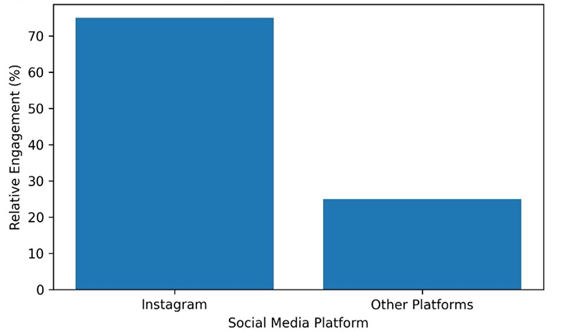
Figure 1 illustrates the centrality of Instagram in
respondents’ digital routines and its dominance over other platforms in
activism-oriented engagement. The high relative engagement with Instagram
reflects its transformation from a leisure-centric application into a critical
socio-political information space. This supports existing scholarship that
identifies visual platforms as affective infrastructures where political
awareness, emotional resonance, and peer visibility converge. In the context of
sexual violence discourse, Instagram’s affordances—such as stories, templates,
and rapid recirculation—facilitate low-barrier participation while maximising
visibility.
|
Figure 2
|
|
Figure 2 Exposure to Hashtag Activism Versus
Awareness of Major Campaigns (n = 80) |
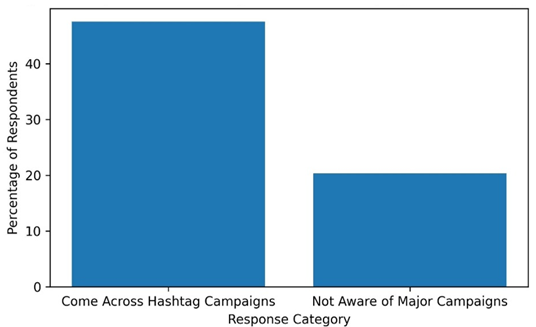
As shown in Figure 2, while 47.5% of respondents reported
encountering hashtag campaigns, 20.3% indicated a lack of awareness of globally
prominent movements such as #MeToo and #BlackLivesMatter. However, within its
first year in 2017, the # MeToo hashtag was used more than 19 million times. Anderson
et al. (2018b) From July 2013 through May 1, 2018, the hashtag #blacklivesmatter has
been used nearly 30 million times, an average of 17,002 times per day. Anderson
et al. (2018a) Despite the historical prominence and scale
of these campaigns, their meanings appear unevenly distributed across users.
The figure reinforces critiques of hashtag activism that question its capacity
to generate sustained collective consciousness beyond momentary visibility.
|
Figure 3
|
|
Figure 3 Levels of Online
Protest Participation (n = 80) |
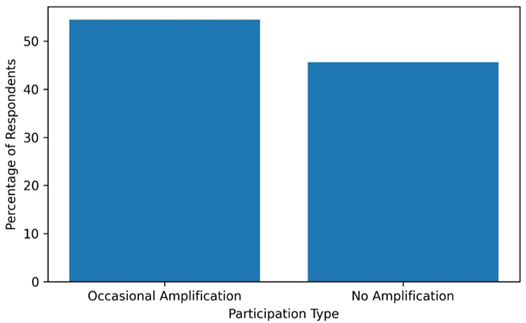
The online protest
participation is largely characterised by intermittent engagement. While 54.4%
of respondents reported occasional amplification of online protests, a
substantial proportion refrained from engaging altogether. This pattern
suggests that digital activism in this context operates primarily through
episodic participation rather than sustained political involvement. Such
engagement enables symbolic alignment with social causes while requiring
minimal time, risk, or commitment, a pattern consistent with broader critiques
of “low-cost” digital activism.
|
Figure 4
|
|
Figure 4 Instagram-Based
Amplification During the Kolkata Hospital Incident (n = 80) |
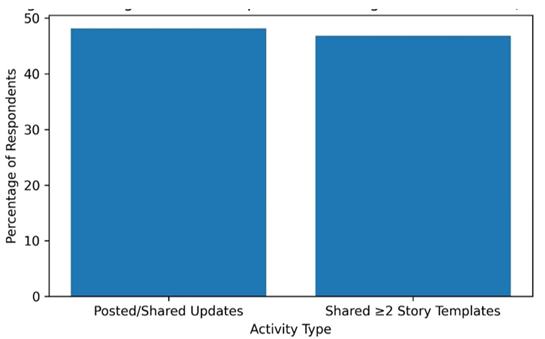
Here, we focus on
platform-specific engagement during the sexual violence incident at a hospital
in Kolkata. Nearly half of the respondents shared updates related to the case
on Instagram, and a comparable proportion reposted at least 2 story templates. The
prominence of templated content reflects a mode of participation driven by
standardisation and repetition, allowing users to express solidarity quickly
and visibly. While this enhances the reach of activist messaging, it also
indicates a reliance on pre-packaged expressions of dissent, raising questions
about the depth and sustainability of engagement.
|
Figure 5
|
|
Figure 5 Verification Practices and Trust in
Information Sources (n = 80) |
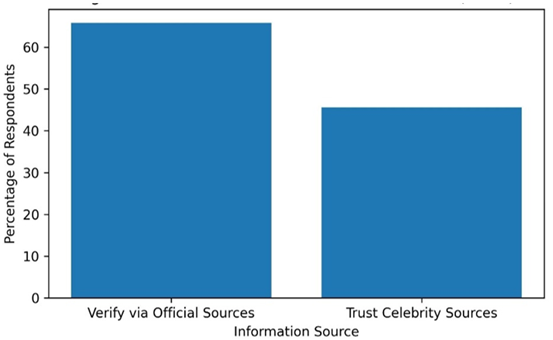
Figure 5 reveals a complex negotiation of trust in
digital information ecosystems. While 65.8% of respondents reported verifying
information through official sources, 45.6% expressed trust in information
shared by celebrities or public figures they follow. This coexistence of
scepticism and reliance underscores the role of parasocial relationships in
shaping perceptions of credibility. Even in the context of sensitive issues
such as sexual violence, trust is not solely institutional but relational,
complicating efforts to counter misinformation during moments of rapid digital
mobilisation.
|
Figure 6
|
|
Figure 6 Attrition from Online Awareness to Offline
Protest Participation (n = 80) |
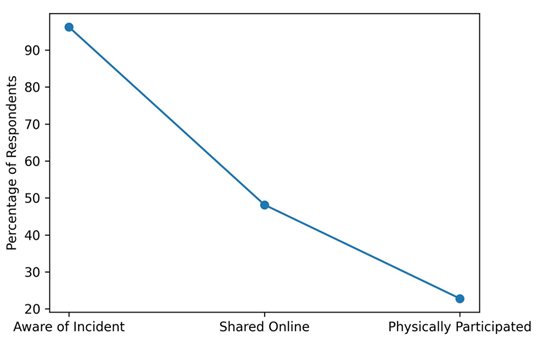
Figure 6 visualises the sharp decline from
near-universal awareness of the Kolkata incident (96.2%) to significantly lower
levels of offline protest participation (22.8%). Although nearly half of the
respondents shared updates online, far fewer translated digital engagement into
physical presence at protest marches such as “Reclaim the Night.” This
attrition underscores structural and affective barriers to offline
mobilisation, including safety concerns, logistical constraints, and
convenience. The figure reinforces the argument that social media functions
more effectively as a space for symbolic solidarity and awareness-building than
as a mechanism for sustained embodied collective action.
CONCLUSION
This study
examined the role of social media platforms in organising collective responses
to sexual violence, amplifying voices, and facilitating transitions from online
awareness to offline protest, with particular attention to Instagram-mediated
activism during the sexual violence incident at a hospital in Kolkata. The
findings demonstrate that social media has become an indispensable
infrastructure for contemporary feminist mobilisation, yet its capacity to
sustain deep political engagement and embodied collective action remains
constrained.
The dominance of
Instagram underscores the growing importance of visual, affect-driven
communication in shaping public engagement with issues of sexual violence. High
levels of daily platform use and routine content
sharing indicate that activism is increasingly embedded within everyday digital
practices rather than occurring as a separate political activity. Social media
thus functions as a space where personal expression, emotional solidarity, and
political signalling intersect, enabling rapid dissemination of information and
widespread symbolic participation.
However, the study
also reveals clear limitations of digital activism. While hashtag campaigns and
story-based amplification enhance visibility, they do not ensure uniform
awareness or sustained political consciousness. The partial recognition of
globally prominent movements suggests that algorithmic circulation fragments
publics and dilutes collective memory. Online participation, largely episodic
and low-intensity, allows users to express alignment
with feminist causes without requiring prolonged commitment, risk, or personal
exposure.
The findings
further highlight a persistent gap between online mobilisation and offline
protest participation. Despite near-universal awareness of the Kolkata incident
and significant online amplification, physical attendance at protest marches
remained limited and contingent on logistical and safety considerations. This
underscores the structural and gendered constraints shaping public
participation, particularly in contexts involving sexual violence, where fears
of harassment, surveillance, and personal risk may inhibit bodily presence in
protest spaces.
Additionally, the
study demonstrates the complexity of trust and information verification within
digital activist ecosystems. While many users report reliance on official
sources, a substantial proportion continue to trust information shared by
familiar public figures, revealing the influence of parasocial relationships in
shaping perceptions of credibility. This duality complicates efforts to counter
misinformation during moments of heightened digital mobilisation.
Taken together,
the findings suggest that social media should not be evaluated solely on its
ability to produce mass street mobilisation. Instead, its significance lies in
its role as an affective and discursive arena that enables awareness-building,
emotional alignment, and agenda-setting. Digital feminist activism, as
evidenced in this study, operates through visibility, repetition, and symbolic
solidarity rather than continuous collective action. Recognising these dynamics
allows for a more nuanced understanding of contemporary protest cultures and
the evolving relationship between digital platforms and feminist resistance.
Future research
may build on these findings by incorporating longitudinal designs,
platform-comparative analyses, or qualitative interviews to examine how digital
participation evolves and how activists negotiate the tensions between
visibility, safety, and political efficacy. As social media continues to
mediate responses to gendered violence, understanding both its possibilities
and limitations remains crucial for scholars, activists, and policymakers
alike.
LIMITATIONS
While the sample
size limits broader generalisability, the findings offer valuable insights into
platform-mediated activism and public engagement in the immediate aftermath of
a gender-based violence incident.
SCOPE
1)
The
effect of peer pressure to share content, and personal opinions and seek
validation on raging issues on social media.
2)
Is
participating in offline protest marches a lifestyle statement and part of
“woke culture” that is further enhanced by active posting on social media
platforms?
ACKNOWLEDGMENTS
None.
REFERENCES
ABP. (2024). Mohammed Siraj Shares “Is It Still Her Fault?” Instagram Story Amid Outrage Over Kolkata Doctor Rape-Murder Case [News]. ABP Live.
Anderson, M., et al. (2018a). An Analysis of #BlackLivesMatter and Other Twitter Hashtags Related to Political or Social Issues (No. 2). Pew Research Center.
Anderson, M., et al. (2018b). How Social Media Users Have Discussed Sexual Harassment Since #MeToo Went Viral. Pew Research Center.
Benton, A. (2022, March 20). The Origins and History of Reclaim the Night. The Mancunion.
Bestvater, S., et al. (2023). Americans’ Views of and Experiences with Activism on Social Media. Pew Research Center.
Chadha, M., and Harlow, S. (2015). The Writing Is on the Wall, or Is It? Exploring Indian Activists’ Beliefs About Online Social Media’s Potential for Social Change. International Journal of Communication, 9, 672–693.
Chatterjee, S. (2024). Kolkata Police Arrest Student over ‘Provocative’ Comments About Mamata [News]. The Hindu.
Chung, S., et al. (2017). Fostering Parasocial Relationships with Celebrities on Social Media: Implications for Celebrity Endorsement. Psychology and Marketing, 34, 481–495. https://doi.org/10.1002/mar.21001
Dhar, A. (2024). Kolkata Doctor Rape-Murder: CBI Takes Accused in Custody; Celebrities to Join Massive Protest Tonight [News]. Hindustan Times.
Garg, T. (2024). Arijit Singh Demands Justice For RG Kar Rape-Murder Victim Through Protest Song ‘Aar Kobe’ [News]. India.com.
Ghosh, D. (2024). Police to Issue Fresh Notices over Fake News [News]. The Times of India.
Ghosh, S. (2023). Arijit Singh Is Everywhere, and Nowhere [Entertainment News]. Film Companion.
Jacob, T. (2024). Kolkata Rape-Murder Case: Timeline of Events So Far [News]. Hindustan Times.
Jaiswal, N. (2022). “Try Every Segment till You Are Successful” Says Vlogger Kiran Dutta Aka Bong Guy [Education]. Telegraph India.
Journal of Modern Law and Policy. (2024). Vol. 4, Issue No. 1 (49–61).
Moldoveanu, L. (2023, December 29). Celebrity Activism: Helpful or Harmful? [Research/Education]. Candlelight (Amnesty International, University of Toronto).
Mukherjee, S. (2024). Reclaim the Night and Win the Day: The Battle for Gender Justice [Political News]. Liberation (Central Organ of CPI[ML]).
Mukul, S. (2024, August 22). How Influencers Took the Fight for Justice to Mamata Banerjee [News]. India Today.
NDTV. (2024). Hrithik Roshan, Priyanka Chopra Join Call For Justice in Kolkata Rape Case [News]. NDTV.
Palmieri-Branco, S. C. (2021). Social Media as a Strategy for Protest Movements in an Era of Government Control [Master’s dissertation, University of Ottawa]. uO Research.
Rizal, P. (2024). Awareness through Clicks: The Role of Social Media in Activism and Social Movements [News]. Comms Room.
Roy, S. (2025). The Influence of Social Media on Public Opinion and Its Impact on Fair Trials. Indian Journal of Law and Research.
Samadder, T. (2024). RG Kar–Bong Guy: “You Know Where the Problem Is…,” Bong Guy Opens Up on the RG Tax Scandal [News]. Hindustan Times Bangla.
Samanta, T., and Banerjee, S. (2025). Reclaiming the Night: A Case Study on Reception of #JusticeForRGKar on Selected Social Media Platforms. International Journal for Crime, Justice and Social Democracy, 14(4), 27–44. https://doi.org/10.5204/ijcjsd.3917
Sanya. (2024). Kolkata Rape-Murder Case: Celebs Face Backlash from Public for Joining Protests [News]. Hindustan Times (Entertainment).
Surjatmodjo, D., Unde, A. A., Cangara, H., and Sonni, A. F. (2024). Information Pandemic: A Critical Review of Disinformation Spread on Social Media and Its Implications for State Resilience. Social Sciences, 13(8), 418. https://doi.org/10.3390/socsci13080418
Telegraph. (2024). Aparna to Swastika, Bengali Film Celebrities Lead All-Night Protest in Calcutta for Justice in RG Kar [News]. Telegraph India.
|
|
 This work is licensed under a: Creative Commons Attribution 4.0 International License
© ShodhSamajik 2026. All Rights Reserved.