|
|
|
|
Original Article
The Impact of Parental Involvement Policies on Educational Outcomes Across Social Classes: A Critical Analysis in the South African Context
|
Stephen
Guduza 1*, Molaodi Tshelane 1 1 Department of Curriculum
and Instructional Studies, College of Teacher Education, College of
Education, University of South Africa, Republic of South Africa |
|
|
|
ABSTRACT |
||
|
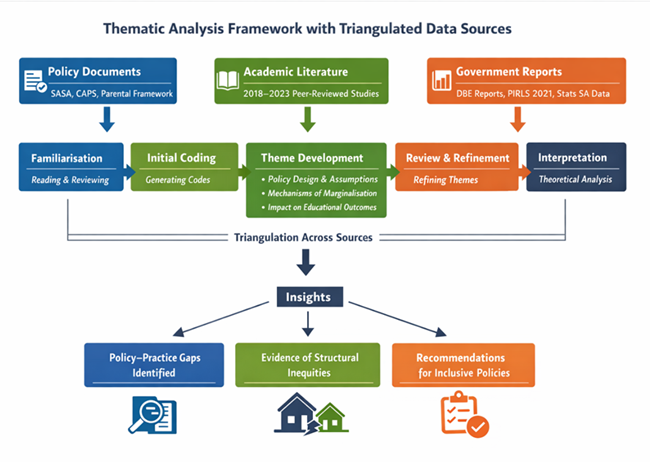
Background: Parental involvement is widely promoted in global and national education policy as a critical driver of learner achievement, school accountability, and democratic participation. In South Africa, post-apartheid education reforms have strongly endorsed parental engagement as a mechanism for improving schooling outcomes and addressing historical disadvantage. However, these policy frameworks frequently operate on implicit assumptions of homogenous parental capacity, access to resources, and familiarity with dominant school cultures. Such assumptions obscure the structural inequalities that shape parents’ ability to participate meaningfully in school-sanctioned forms of engagement. Aim: The article undertakes a critical examination of parental involvement expectations as articulated in South African education policy. It argues that these expectations are not socially neutral but are structured in ways that align closely with middle-class norms, resources, and forms of cultural capital. As a result, families from working-class and economically marginalised backgrounds are disproportionately disadvantaged in their ability to meet policy-defined standards of engagement. These effects are most pronounced in township and rural schooling contexts, where structural poverty, limited access to resources, and historical patterns of exclusion continue to shape relationships between schools and households. Methods: The study employs a qualitative narrative literature review design which synthesises national education policy texts, peer-reviewed empirical research, and selected government and civil society reports published between 2018 and 2023. Analysis is guided by Bourdieu’s concept of cultural capital and Lareau’s notion of concerted cultivation. These theoretical lenses enable a critical examination of how power relations, social class, and institutional norms influence which forms of parental involvement are legitimised within schooling systems. Results: The review indicates that parental involvement policies in South Africa tend to privilege forms of engagement associated with middle-class norms. These include attendance at school meetings scheduled during standard working hours. They also encompass expectations of English-medium communication between schools and families. In addition, policies frequently assume routine parental supervision of homework and active participation in formal school governance structures. These expectations generate multiple mechanisms of marginalisation. Economic constraints such as inflexible work schedules, transport costs, and lost wages limit working-class parents’ physical presence at schools. Cultural and linguistic mismatches between schools and families undermine parents’ confidence and sense of legitimacy, while deficit-oriented discourses further erode parental self-efficacy. Collectively, these dynamics contribute to the reproduction of educational inequality and the persistence of achievement gaps across socio-economic lines. Conclusion: Parental involvement policies in South Africa cannot be understood as neutral mechanisms of inclusion. Instead, they risk reproducing apartheid-era patterns of exclusion by legitimising specific forms of cultural capital and narrowly defined modes of participation. In the context of limited explicit consideration of the structural conditions shaping families’ capacities to engage, such policies may inadvertently intensify existing patterns of educational stratification. Constraints related to income insecurity, inflexible labour arrangements, linguistic exclusion, and uneven access to material resources limit the ability of many caregivers to meet institutional expectations. As a result, schools may misrecognise constrained participation as parental disinterest, further marginalising already vulnerable households and reinforcing unequal educational outcomes. Significance: The article argues for a re-conceptualisation of parental involvement grounded in social justice and contextual responsiveness. Policy and practice must foreground flexible and context-sensitive modes of parental engagement that recognise the diverse social, linguistic, and economic realities of South African families. This includes the provision of multilingual communication strategies, adaptable scheduling of school–parent interactions, and the development of asset-based partnerships that position communities not as deficient but as holders of valuable educational resources and knowledge. In parallel, sustained teacher professional development is required to strengthen culturally responsive and relational pedagogies that enable educators to engage meaningfully with families across classed and cultural differences. Collectively, these shifts are critical if parental involvement is to operate as a vehicle for educational equity and social inclusion, rather than reproducing patterns of exclusion within post-apartheid schooling. Keywords: Parental Involvement, Educational
Policy, Social Class, Cultural Capital, South Africa, Educational Outcomes,
Inequality |
||
INTRODUCTION
Parental
involvement is widely regarded as a cornerstone of effective education systems,
linked to higher student achievement, improved behaviour, and greater school
completion rates (Epstein, 2018, OECD (2018). In South Africa, this principle is
enshrined in the South African Schools Act (SASA) (Act 84 of 1996), which
mandates parental participation through School Governing Bodies (SGBs) and
community engagement. Global research indicates that parental involvement
policies are frequently underpinned by implicit assumptions regarding parents’
access to resources, availability of time, and familiarity with institutional
norms. These assumptions are rarely articulated within policy texts.
Consequently, policy designs tend to align more closely with the capacities and
dispositions of middle-class families, thereby conferring disproportionate
advantages on this group Lareau
(2015), Vincent
and Ball (2007). This article argues that South Africa’s
parental involvement framework, while progressive in intent, perpetuates
class-based inequalities by privileging middle-class norms.
South Africa’s
educational landscape is marked by profound socio-economic disparities rooted
in apartheid. Although significant reforms have been introduced since 1994,
South African schooling continues to reflect deep structural stratification.
Former Model C schools, which historically served white learners and now
largely cater to middle-class communities, are typically characterised by
strong resource bases and high levels of parental engagement. In contrast,
township and rural schools that serve large proportions of the learner
population frequently operate within contexts of sustained underinvestment.
These schools often face inadequate infrastructure and limited material
resources. Parental participation in such settings is further constrained by broader
conditions of socio-economic precarity, which shape both the forms and the
visibility of parental engagement Soudien
(2018), Spaull
(2019). Recent crises, such as the COVID-19
pandemic, further exposed these gaps, as remote learning required home-based
resources (e.g., internet, quiet study spaces) accessible mainly to
middle-class families Department
of Basic Education (2021).
This study addresses three research questions:
·
How do
South African parental involvement policies reflect middle-class norms and
expectations?
·
What
mechanisms marginalise working-class and impoverished families from effective
engagement?
·
What are
the implications of these dynamics for educational outcomes across social
classes?
Foregrounding the
South African context, this article contributes to a growing body of literature
critiquing "one-size-fits-all" parental involvement models Le Grange (2020), Mncube
(2021). The findings aim to inform evidence-based
policy reforms that prioritise equity in a context of extreme inequality.
Literature Review
Parental Involvement: Definitions and Global Evidence
Parental
involvement in education encompasses a range of activities that extend across
home, school, and community contexts. At home, it includes practices such as
assisting children with homework and supporting learning routines. Within the
school environment, involvement may take the form of attending meetings,
participating in school events, or engaging with teachers. Transcending the
household and school, parental engagement can also involve collaboration with
community organisations and initiatives that support children’s educational
development Epstein
(1995).
Extensive
research, including meta-analytical studies, demonstrates a positive
association between parental involvement and student academic success (Jeynes,
2017). However, the forms and effectiveness of parental engagement are not
uniform, varying considerably according to socio-economic status (SES).
Middle-class parents, for example, frequently practise what Lareau
(2003) describes as "concerted
cultivation," a deliberate strategy of fostering children’s cognitive,
social, and cultural development. These parents are frequently positioned to
mobilise cultural capital, as conceptualised by Bourdieu
(1986), in their interactions with educational
institutions. This capacity enables them to navigate school structures
effectively and to advocate for their children’s academic and developmental
needs. In addition, they are often able to cultivate enriched learning
environments within the home and through access to supplementary educational
opportunities beyond the school context. This form of engagement enables
middle-class families to align their practices with dominant school
expectations. Through this alignment, they are better positioned to shape
interactions with educators and to influence educational processes in ways that
support favourable learner outcomes. Collectively, these dynamics illustrate
how socio-economic privilege intersects with institutional structures to
differentially shape patterns of student success.
Research indicates
that parental engagement practices vary significantly across socio-economic
contexts, reflecting broader structural inequalities. In South Africa,
working-class and economically disadvantaged families often adopt what Lareau
(2003) terms "the accomplishment of natural
growth," in which the emphasis is placed on children’s safety,
independence, and autonomy. Such approaches are frequently shaped by
constraints of time, economic precarity, and limited familiarity with institutional
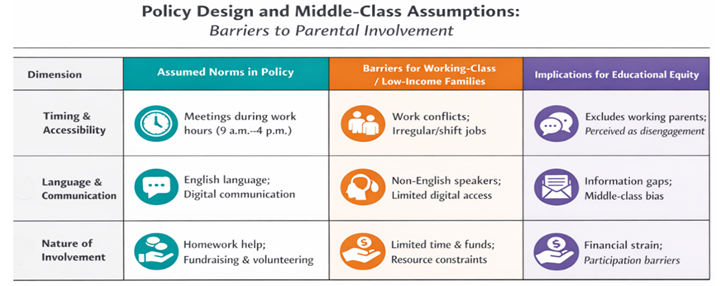
expectations. In contrast, education policies and school frameworks frequently
define parental involvement through behaviours that mirror middle-class norms.
These behaviours typically include regular attendance at school meetings,
consistent monitoring of homework, and participation in formal governance
structures. Consequently, modes of engagement are normalised as indicators of
commitment, while alternative forms of parental support are rendered less
visible within institutional accounts.
Comparative
international evidence illustrates similar patterns. The OECD (2018) reports marked differences in parental
participation across member countries. Approximately 68% of parents from high
socio-economic status backgrounds attend school events. In contrast, only about
32% of parents from low socio-economic status households can participate in
similar activities. These patterns underscore the persistence of socio-economic
inequalities embedded within policy-defined models of parental engagement. In
the United Kingdom, Vincent
and Ball (2007) demonstrate that policies centred on
parental choice are unevenly experienced across social classes. Middle-class
families are often able to draw on informational resources and institutional
familiarity to navigate these policy environments effectively. Conversely,
working-class parents frequently face structural constraints that restrict
their capacity to exercise meaningful choice. Therefore, these policies tend to
reproduce existing inequalities by amplifying differential levels of agency and
access. In the United States, schools often rely on standardized communication
mechanisms, such as email-based updates, to engage parents. These approaches
tend to disadvantage households with limited English proficiency or low
literacy levels. These constraints further limit equitable participation in
school activities Cooper
et al. (2016).
Collectively,
these findings highlight the interplay between policy frameworks, institutional
expectations, and socio-economic conditions in shaping parental involvement.
The findings demonstrate how certain forms of engagement are privileged,
benefiting families whose resources, cultural capital, or familiarity with
institutional norms align with these expectations. Conversely, families whose
circumstances do not correspond to these normative models are often
marginalised within the educational system.
Parental Involvement Policies in South Africa
South Africa’s
parental involvement framework is established under the South African Schools
Act (SASA, 1996). The Act requires the creation of School Governing Bodies
(SGBs) with 45% parent representation. It also mandates that schools develop
formal home–school partnership agreements, as outlined in Section 58. In
addition, SASA requires regular parent–teacher consultations, as specified in
Section 59. Subsequent policy instruments, including the Integrated School
Safety Strategy DBE (2018) and the Curriculum
and Assessment Policy Statements (CAPS), further emphasise collaborative
engagement between parents, educators, and school leadership. The 2021 National
Parental Involvement Framework Department
of Basic Education (2021) explicitly aims to strengthen home–school
partnerships. However, the framework largely maintains conventional modes of
engagement. These include termly meetings and voluntary fundraising activities.
Such practices are closely aligned with middle-class norms.
Despite these
formal provisions, implementation is uneven across South African schools. Motala
et al. (2009) observed that SGBs in historically affluent
“Model C” schools are dominated by middle-class parents who possess
professional expertise and the time to participate actively in governance
processes. In contrast, township and rural schools often face significant
structural barriers. Parental participation in these contexts is limited by
work obligations. Additional constraints include restricted access to
transportation and inadequate institutional support.
Recent studies
underscore the persistence of these disparities. For example, only 22% of
parents in no-fee schools attend SGB meetings regularly, compared with 65% in
fee-paying schools Department
of Basic Education (2022), while 40% of township parents report that
the inability to take time off work restricts engagement Le Grange (2020). Linguistic barriers, such as the
predominance of English as the medium of communication in non-English-speaking
households, further marginalise many parents Msimang
(2021).
These patterns can
be critically analysed through Bourdieu
(1986) concept of cultural capital, which
frames parental engagement as a resource unevenly distributed along
socio-economic lines. Middle-class parents often possess the skills, knowledge,
and social networks that align with the expectations embedded in school
governance and communication structures. Such parents can leverage their
familiarity with institutional norms to support their children’s educational
trajectories, advocate for school resources, and navigate bureaucratic
processes effectively. In comparison, working-class and impoverished parents
frequently lack the same forms of cultural capital, resulting in reduced
participation and diminished influence in school decision-making.
Lareau
(2003) framework of concerted cultivation further illuminates how
socio-economic disparities shape engagement practices. Middle-class families
often participate in structured and intentional activities aimed at fostering
their children’s cognitive and social development. These activities include
attending school meetings, helping with homework, and engaging in
extracurricular programs. Conversely, working-class and low-income families
often follow the approach described as the “accomplishment of natural growth”. Their
focus tends to be on ensuring children’s safety, offering basic support, and
promoting autonomy, with comparatively less engagement in formal school
structures. In South Africa, parental involvement policies tend to implicitly
favour the middle-class model of engagement. This approach benefits families
who have the time, resources, and cultural familiarity to meet policy
expectations, while simultaneously marginalising those whose socio-economic
conditions or cultural practices do not align with these norms.
Collectively,
these findings indicate that although South African parental involvement
policies formally acknowledge the importance of home–school partnerships,
persistent structural inequalities and class-based disparities in cultural
capital continue to restrict meaningful participation. Addressing these
challenges requires the adoption of flexible, context-sensitive strategies that
recognise and accommodate the diverse capacities, languages, and cultural
practices of parents. Potential policy reforms could address existing
inequities in parental engagement by implementing multilingual communication
strategies. Scheduling school meetings outside standard working hours may
further enhance accessibility for diverse families. Policies could also
prioritise asset-based collaborations with local communities to recognise and
leverage existing parental and cultural resources. Additionally, providing
teachers with professional development in culturally responsive engagement
practices would strengthen their capacity to support inclusive and equitable
parental participation. Implementing such measures is essential for ensuring
that parental involvement serves as a tool for promoting educational equity
rather than perpetuating the stratification inherited from apartheid.
Class-Based Disparities in South African Education
South Africa’s
education system remains one of the most unequal globally, with disparities in
learning outcomes closely tied to socio-economic status. The 2023 Progress in
International Reading Literacy Study (PIRLS) revealed that 81% of Grade 4
learners in no-fee schools are unable to read for meaning, highlighting
widespread “learning poverty” among disadvantaged learners Spaull
and Kotze (2023). These educational inequities cannot be
explained solely by factors within schools. They are also influenced by
differences in parental involvement. Such differences are closely connected to
social class, the availability of cultural capital, and the resources present
within households.
Middle-class
parents, particularly those whose children attend former Model C schools,
typically engage in structured and deliberate activities designed to foster
their children’s cognitive, social, and academic development. This includes
attending school meetings, assisting with homework, participating in
extracurricular programs, and providing access to private tutoring and digital
learning resources. Such engagement aligns closely with Lareau
(2003) concept of “concerted cultivation,” which
highlights how middle-class families intentionally organise children’s time and
activities to develop skills, competencies, and institutional familiarity that
support future success. The effectiveness of these strategies is further
reinforced by Bourdieu
(1986) notion of cultural capital. Middle-class
families often possess the linguistic, social, and cultural knowledge valued by
formal education systems, enabling them to navigate school structures, advocate
for their children, and leverage institutional mechanisms to optimise learning
outcomes.
Collectively, the
interplay of concerted cultivation and cultural capital helps to explain
patterns of middle-class parental involvement. These practices frequently
result in higher academic achievement for children. They also foster greater
familiarity with school expectations. Furthermore, they provide enhanced
opportunities for children to access social and educational resources.
Conversely, in
South Africa, working-class and low-income families, particularly those in
township and rural areas, often engage in what Lareau
(2003) describes as the “accomplishment of natural
growth.” This approach prioritises children’s safety, basic needs, and personal
autonomy. It does not emphasise structured cognitive activities or engagement
mediated by schools. These households frequently experience substantial time
poverty because many adults engage in informal or precarious labour, including
domestic work, street vending, or seasonal employment. Such constraints limit
their ability to participate in school-based activities and governance structures
Soudien
(2018). Moreover, these families tend to possess
lower levels of cultural capital. They often have limited familiarity with the
specialised language of instruction, institutional norms, and school-based
expectations. This lack of familiarity reduces their capacity to navigate
formal education, advocate for their children, or utilise institutional
resources effectively Bourdieu
(1986), Mncube
(2021).
The COVID-19
pandemic further exposed and intensified existing educational inequities in
South Africa. According to the Department of Basic Education Department
of Basic Education (2021), 63% of learners in no-fee schools lacked
access to digital learning devices and reliable internet connectivity, severely
limiting their capacity to engage with remote education. In contrast,
middle-class households were often able to sustain learning continuity through
access to online platforms, private tutoring, and other home-based educational
resources. Empirical studies underscore that this digital divide
disproportionately affected learners from low-income and rural communities,
exacerbating the achievement gap between socio-economic groups (Mncube &
Harber, 2021, Spaull, 2020, Van der Berg and Gustafsson (2022).
Internationally,
similar patterns have been observed in contexts where structural inequalities
intersect with emergency remote learning, with low-income students facing
amplified learning loss and heightened risks of disengagement (Kuhfeld et al.,
2020; Reimers & Schleicher, 2020). The pandemic thus functioned as a
“revealer” of entrenched systemic disparities, demonstrating how socio-economic
status, parental resources, and cultural capital converge to shape educational
outcomes.
From a Bourdieusian perspective, the crisis
highlighted the extent to which middle-class families could leverage economic,
social, and cultural capital to mitigate educational disruption, whereas
working-class and impoverished families faced compounded structural barriers
that restricted their children’s learning opportunities Bourdieu
(1986), Lareau
(2003). This evidence reinforces the imperative for
policy interventions that address both digital inequities and the broader
socio-cultural constraints that limit meaningful parental engagement and
learner participation in disadvantaged communities.
Bourdieu
(1986) concept of cultural capital and Lareau
(2003) framework of concerted cultivation together
illuminate how structural and cultural inequalities intersect to shape
educational outcomes. Middle-class families can convert economic, social, and
cultural resources into tangible educational advantages. Their familiarity with
the norms, language, and expectations of formal schooling allows them to
navigate institutional structures effectively, advocate for their children, and
participate in school governance, thereby reinforcing academic success Lareau
(2003), Bourdieu
(1986).
In addition,
middle-class parents frequently provide enriched learning environments that
extend beyond formal schooling. These supports often include structured
assistance with homework, active engagement in extracurricular activities, and
access to digital resources or private tutoring Hoadley
(2022), Spaull
and Kotze (2023) From a theoretical perspective, these
practices closely reflect Lareau
(2003) concept of concerted cultivation. According
to this framework, parents deliberately organise and structure their children’s
activities. They also scaffold cognitive, social, and cultural development. The
goal of these practices is to align children’s learning and behaviour with the
expectations of formal educational institutions.
Simultaneously, Bourdieu
(1986) concept of cultural capital provides insight
into these dynamics. Middle-class families possess familiarity with the
language, norms, and conventions of formal education. This knowledge enables
them to navigate schooling systems effectively. It also allows them to advocate
for their children within institutional structures. Additionally, they can
secure resources and support from schools to enhance their children’s learning
outcomes. Together, these frameworks explain why middle-class parental involvement
frequently translates into enhanced academic outcomes, greater access to social
and educational resources, and reinforced alignment with school-based norms.
Conversely,
working-class and low-income families, particularly in rural and township
contexts, encounter systemic and structural constraints that limit their
capacity to engage with schools in ways that are institutionally recognised.
Time poverty, driven by informal or precarious labour, restricts parental
availability for school meetings, governance participation, or home-based
academic support Soudien
(2018), Van der Berg and Gustafsson (2022). These households generally have lower
levels of cultural capital. They often possess limited familiarity with the
specialised language of instruction, school norms, and expectations for
parental engagement. As a result, their capacity to navigate institutional
processes effectively is reduced Mncube
(2021). These disparities were further intensified
by crises such as the COVID-19 pandemic. During this period, learners from
disadvantaged backgrounds experienced disproportionately severe learning loss.
Limited access to digital tools and online learning platforms constrained their
ability to engage with educational content. In contrast, middle-class families
were generally able to maintain continuity in learning through digital and
home-based resources Department
of Basic Education (2021), Spaull, 2020; Kuhfeld et al., 2020).
These dynamics
illustrate how educational inequities are not merely the product of individual
parental effort but are embedded within broader socio-economic structures and
policy frameworks. Policies that fail to account for diverse household
realities often implicitly privilege middle-class models of involvement,
thereby reproducing intergenerational inequalities and reinforcing the
alignment between socio-economic advantage and academic success Vincent
and Ball (2007), Cooper
et al. (2016). Addressing these inequities requires the
implementation of policy interventions that are responsive to the specific
contexts of families and schools. Such interventions may include flexible
scheduling of school interactions to accommodate parents’ work and caregiving
obligations. Multilingual communication strategies can ensure that parents who
do not speak the dominant language are able to access information and
participate meaningfully. Community-based learning partnerships provide
opportunities to integrate local knowledge and social networks into school
activities. Teacher professional development in culturally sustaining
pedagogies equips educators to recognise and build upon the diverse strengths
and practices of families. Collectively, these strategies are critical for
ensuring that parental involvement serves as a mechanism for promoting equity
rather than inadvertently reinforcing historical and structural disparities Le Grange (2020), Mncube
(2021).
These disparities
require policy and practice interventions that extend beyond the formal school
environment to engage with the broader socio-economic and cultural contexts of
learners’ households. Research consistently highlights that parental engagement
is deeply mediated by household resources, parental education, and cultural
capital, all of which shape the forms and effectiveness of participation in
school life Bourdieu
(1986), Lareau
(2003), Mncube
(2021). Accordingly, flexible scheduling of
parent–teacher interactions is critical, as rigid meeting times often
disadvantage caregivers constrained by informal or precarious work obligations,
particularly in township and rural communities Le Grange (2020), Soudien
(2018). Similarly, multilingual communication
strategies are necessary to bridge language gaps between schools and
households, ensuring that information and expectations are accessible to
parents who may not be fluent in the language of instruction (Msimang, 2021).
Community-based
partnerships provide a promising avenue for enhancing educational engagement.
These initiatives enable schools to leverage local knowledge and existing
social networks. Such approaches align with asset-based frameworks, which
emphasise recognising and mobilising the strengths and capacities of families
and communities. This perspective contrasts with deficit-oriented models that
focus primarily on limitations or shortcomings Epstein
(1995), Hoadley
(2022). Moreover, teacher professional development
in culturally responsive and relational pedagogies is essential. Such training
equips educators with the skills to interpret diverse parental practices.
Teacher professional development in culturally responsive and relational
pedagogies also enables teachers to mediate different forms of cultural capital
effectively. Ultimately, these competencies help foster more inclusive and
equitable parental participation in school processes Seeher
and Nxumalo (2025), Prinsloo
and Mkhize (2024). Evidence from comparative international
contexts underscores the effectiveness of these strategies. Research from the
United States, the United Kingdom, and Australia shows that flexible and
culturally attuned parental engagement policies enhance parental confidence.
These policies also increase participation rates. Importantly, they contribute
to improved student achievement, particularly among socio-economically
disadvantaged households Cooper
et al. (2016), Vincent
and Ball (2007), OECD (2018).
When considered
collectively, these measures indicate that parental involvement cannot be
understood or operationalised as a neutral policy tool. Instead, deliberate
attention to structural constraints, cultural alignment, and relational
pedagogy is required to transform engagement into a mechanism for educational
equity. If these factors are not considered, parental involvement policies risk
reinforcing historical inequalities. Families whose resources, social networks,
and cultural knowledge align with institutional norms are more likely to
benefit. Conversely, households lacking these advantages may remain
marginalised. This dynamic undermines the transformative potential of
post-apartheid education policies.
Theoretical Framework: Cultural Capital and Parental Engagement
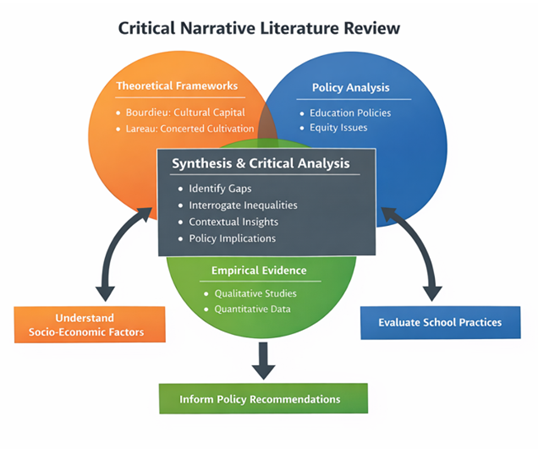
This study draws
on two interrelated theoretical perspectives—Bourdieu (1986) cultural capital theory and Lareau
(2003) frameworks of concerted cultivation and the accomplishment of natural
growth—to examine how class-based differences shape parental involvement in
South African schools. Together, these theories illuminate the structural and
cultural mechanisms that mediate educational inequalities and explain how
policy expectations interact with household practices and resources.
Cultural Capital and Parental Engagement
Cultural Capital Theory
Bourdieu
(1986) conceptualises social classes as
differentiated by distinct forms of capital: economic, social, and cultural.
Cultural capital in both its embodied and objectified forms play a central role
in shaping educational outcomes. Embodied cultural capital encompasses the
dispositions, skills, and knowledge that individuals acquire through
socialisation within the family and broader social environment. This includes
ways of speaking, problem-solving approaches, attitudes toward learning, and
cognitive habits that are valued by educational institutions. Objectified
cultural capital refers to tangible resources such as books, technology,
educational materials, and other artefacts that support learning and
intellectual development. These resources often mediate access to formal
education by providing learners with tools aligned with school expectations.
Institutionalised cultural capital represents the formal recognition of
culturally valued competencies, typically through qualifications,
certifications, or academic credentials, which confer legitimacy and social
advantage within education systems Bourdieu
and Passeron (1990). Empirical studies indicate that students
from families possessing high levels of embodied and objectified capital tend
to achieve better academic outcomes, demonstrate greater familiarity with
school routines, and access a wider range of educational opportunities (Sirin,
2005, Lareau
(2003). Conversely, working-class and low-income
families often have limited access to these forms of capital, constraining
their ability to support learning and engage fully with institutional
expectations Mncube
(2021), Soudien
(2018). Research further shows that such
disparities contribute to persistent achievement gaps, highlighting the
critical role of cultural capital in reproducing social inequalities within
educational systems Bourdieu
and Passeron (1990), Reay (2017).
Within the
schooling context, middle-class families tend to transmit cultural capital that
closely aligns with the norms and expectations of educational institutions.
This includes proficiency in formal communication, familiarity with pedagogical
practices, and confidence in interacting with educators and participating in
school governance structures. These forms of cultural capital enable children
to navigate institutional processes more effectively. They also facilitate
access to social and educational opportunities that enhance academic
performance and broader educational outcomes Le Grange, L. (2020), Spaull
(2019). Research indicates that children from these
families are more likely to develop competencies valued by schools, including
metacognitive skills, self-advocacy, and familiarity with assessment and
disciplinary conventions Lareau
(2003), Reay (2017).
In contrast,
working-class and low-income families often possess cultural knowledge,
practices, and parenting strategies that differ from those recognised and
valorised by schools. These households may prioritise children’s safety,
well-being, and autonomy rather than structured academic enrichment, reflecting
Lareau
(2003) framework of the “accomplishment of natural
growth.” The resulting misalignment between home practices and school
expectations can lead educators to perceive parents as disengaged or deficient,
even when parents are actively supporting their children within their
socio-cultural and economic constraints Mncube
(2021), Soudien
(2018). Empirical studies from South Africa and
comparable contexts suggest that this divergence contributes to persistent
educational inequities, as schools inadvertently reward middle-class forms of
participation while undervaluing alternative forms of familial engagement Spaull
(2019), Hoadley
(2022).
Furthermore,
research highlights that the transmission of cultural capital is not purely
inherited but also shaped by access to institutional resources, social
networks, and community support. Families with limited financial, social, or
symbolic resources face structural barriers that restrict their capacity to
engage in school-based activities, influence decision-making, or provide
enrichment opportunities outside of formal schooling Van der Berg and Gustafsson (2022), Mncube
(2021). These patterns demonstrate the
interdependence of social class, cultural capital, and educational outcomes,
emphasising the need for policies and pedagogical strategies that recognise and
leverage the strengths of all families rather than privileging middle-class
norms exclusively.
Concerted Cultivation and the Accomplishment of Natural Growth
Lareau
(2003) ethnographic research builds on Bourdieu’s
framework by linking parental engagement to daily household practices and
socialisation patterns. Middle-class parents frequently engage in concerted
cultivation, intentionally structuring children’s daily activities to promote
cognitive, social, and emotional development. Such activities often include
facilitating extracurricular enrichment, assisting with homework, attending
parent–teacher meetings, and actively advocating for children within
institutional structures. Concerted cultivation operates synergistically with
cultural capital because the dispositions, knowledge, and skills transmitted at
home align with school expectations.
This alignment
enables children to acquire the competencies, confidence, and social fluency
necessary to navigate institutional norms and excel in formal education Lareau
(2003), Le Roux (2020), Reay (2017). Empirical research in South Africa
demonstrates that children from middle-class households often benefit from
enhanced learning outcomes, greater familiarity with school routines, and
improved access to social and educational resources Spaull
(2019), Hoadley
(2022). International studies similarly indicate
that structured parental engagement predicts higher academic achievement, more
effective school navigation, and sustained educational advantage across diverse
contexts OECD (2018), Vincent
and Ball (2007), Cooper
et al. (2016).
In contrast,
working-class and low-income families frequently rely on what Lareau
(2003) terms the accomplishment of natural growth.
This approach prioritises children’s safety, basic well-being, and autonomy
rather than structured academic enrichment or institutional engagement. These
households often face constraints such as irregular or informal work schedules,
limited financial resources, and restricted access to educational materials,
which reduce their capacity to participate in school-based activities or
governance structures Soudien
(2018), Department
of Basic Education (2021). Viewed through a Bourdieusian perspective,
these limitations reflect lower levels of cultural capital. Parents may have
limited familiarity with the specialised language used in schools, the
behavioural norms expected within educational settings, and the forms of
participation valued by institutions. Such gaps reduce their ability to
navigate schooling processes effectively and to support their children’s
engagement in ways recognised by educators Bourdieu
(1986), Mncube
(2021).
Consequently,
children from these families often receive less academic support at home. They
tend to have minimal influence in school decision-making processes. Access to
educational resources, social networks, and learning opportunities is also more
restricted compared to their middle-class peers Hoadley
(2022), Spaull
(2019). Research indicates that these patterns
contribute to the perpetuation of educational inequalities. Institutional
structures and policies frequently valorise forms of parental engagement
associated with middle-class families. At the same time, they often fail to
recognise or support alternative practices that emerge from diverse
socio-economic and cultural contexts Le Grange (2020), Motala
et al. (2009).
Collectively,
integrating Lareau’s insights on household strategies with Bourdieu’s
conceptualisation of cultural capital provides a robust theoretical framework.
This framework helps explain how socio-economic status influences parental
involvement, access to learning opportunities, and educational outcomes. This
perspective underscores the need to design school policies and pedagogical
practices that respond to the diverse capacities of families. The perspective
emphasises the importance of recognising and accommodating different cultural
practices. It also highlights the necessity of addressing structural
constraints that affect parental engagement. Policies and practices should not
privilege the participation patterns of a single social class.
Context-sensitive
strategies are essential for promoting educational equity. These include
multilingual communication to accommodate diverse language backgrounds.
Flexible scheduling of school meetings allows parents with varying work
commitments to participate. Community-based partnerships help mobilise local
knowledge and social networks in support of learning. Teacher professional
development in culturally responsive engagement practices equips educators to
interpret and mediate diverse forms of parental involvement. Collectively,
these approaches can help mitigate intergenerational disadvantage Epstein
(1995), Seeher
and Nxumalo (2025), Prinsloo
and Mkhize (2024).
Integrating Bourdieu and Lareau
Integrating
Bourdieu’s theory of cultural capital with Lareau’s framework of parental
child-rearing strategies provides a comprehensive account of how socio-economic
class structures parental involvement and shapes educational outcomes.
Bourdieu’s conceptualisation provides a macro-structural lens for understanding
how education systems operate as sites of social reproduction. It demonstrates
that schools are not neutral institutions but are structured around dominant
cultural norms that reflect middle-class histories, values, and ways of being.
Within this framework, particular forms of knowledge are legitimised as
academically valuable, while others are marginalised or rendered invisible.
Language practices, modes of reasoning, and interactional styles that mirror
middle-class socialisation are treated as indicators of ability and competence
rather than as socially acquired dispositions.
Educational
institutions also privilege dispositions such as confidence in formal settings,
familiarity with abstract reasoning, and ease in engaging with authority
figures. These dispositions are closely tied to habitus, which shapes how
learners and parents perceive, interpret, and respond to schooling
expectations. As middle-class families are more likely to transmit these
dispositions through everyday socialisation, their children enter school with
cultural resources that align with institutional norms. This alignment enables
them to navigate assessment practices, classroom interactions, and governance
structures with relative ease.
Conversely,
learners and parents whose cultural repertoires differ from those valorised by
schools may be perceived as less capable or less engaged, even when they
possess rich forms of knowledge and experience rooted in their social contexts.
The unequal recognition of cultural capital thus contributes to patterned
disparities in academic achievement and participation. In this way, Bourdieu’s
macro-structural analysis demonstrates that educational institutions play an
active role in the reproduction of social inequality. Schools tend to reward
familiarity with dominant cultural forms, including modes of language use,
interaction, and knowledge expression. These forms are closely aligned with
middle-class norms and practices. As a result, alternative ways of knowing and
demonstrating competence are often marginalised or rendered invisible within
formal schooling. This institutional privileging of dominant cultural resources
contributes to the persistence of class-based educational disparities rather
than their remediation Bourdieu
(1986), Bourdieu
and Passeron (1990). These institutionalised norms operate as
mechanisms of symbolic power, rendering some parental practices visible and
legitimate while marginalising others.
Lareau’s
scholarship complements structural accounts of inequality by illuminating the
micro-level mechanisms through which class-based advantages and constraints are
generated and sustained within everyday family practices. Her distinction
between concerted cultivation and the accomplishment of natural growth
demonstrates that parental involvement is not simply a function of commitment
or concern for children’s education. Instead, it is profoundly shaped by
unequal access to time, economic resources, institutional knowledge, and
confidence in engaging with professionals and authority figures Lareau
(2003), Lareau
(2011).
Subsequent
research conducted across a range of national contexts has demonstrated that
these patterned approaches to child-rearing are strongly associated with social
class. Empirical studies indicate that such practices have enduring effects on
children’s educational trajectories. Differences in parental strategies shape
the development of children’s communicative repertoires in systematic ways.
These strategies also influence how children perceive and enact their sense of
entitlement when interacting with authority figures within institutional
settings. In addition, variations in parental engagement affect children’s
capacity to navigate, interpret, and negotiate institutional spaces, such as
schools, where expectations and power relations are often implicit. These
dynamics have been documented in comparative studies of schooling in diverse
socio-economic settings, underscoring the long-term educational consequences of
class-based parenting practices Vincent
and Ball (2007), Calarco
(2018).
A growing body of
research indicates that concerted cultivation is closely linked to the
development of specific dispositions. These dispositions are explicitly valued
within formal schooling contexts. They include verbal assertiveness, confidence
in interactions with adults, and strategic help-seeking behaviours Calarco (2014), Reay (2017), Vincent (2017).
Children socialised within this framework learn to question instructions, seek
clarification, and negotiate academic demands, practices that align closely
with pedagogical norms in middle-class schooling environments. Empirical
studies demonstrate that these interactional competencies have a direct impact
on children’s experiences in school. They facilitate more frequent and
higher-quality exchanges with teachers. They also increase access to
instructional feedback and enhance opportunities for academic support. Over
time, these advantages contribute to cumulative educational benefits Calarco
(2018), Hoadley
(2022).
In comparison,
research on the accomplishment of natural growth indicates that this approach
fosters important qualities in children, including independence, adaptability,
and emotional resilience. However, it provides fewer structured opportunities
for children to develop the communicative and advocacy skills that are highly
valued within formal schooling contexts Lareau
(2011), Soudien
(2018). In many working-class and low-income
contexts, children are socialised to respect authority and manage challenges
autonomously, which may limit their propensity to seek assistance or challenge
institutional decisions. Comparative studies conducted across multiple national
contexts suggest that differences in interactional orientations can influence
educational outcomes. Learners whose parental engagement aligns less closely
with institutional expectations may be disadvantaged in education systems that
implicitly require proactive advocacy from both parents and children Reay (2017), Vincent
and Ball (2007). Consequently, schools may interpret
behaviours such as restraint or deference as a lack of engagement. This
misinterpretation can further marginalise learners whose patterns of home
socialisation do not align with the dominant expectations of educational
institutions.
Collectively, this
body of research highlights that differences in child-rearing practices do not
reflect variations in parental commitment to education. Instead, they represent
structurally patterned responses to unequal access to time, economic resources,
and institutional power. The alignment between concerted cultivation and school
norms allows middle-class children to transform everyday interactional
practices into academically recognised advantages. In contrast, the skills and
strengths fostered through the accomplishment of natural growth often remain
unacknowledged within formal educational settings.
When considered
alongside Bourdieu’s theory of cultural capital, Lareau’s framework provides a
nuanced explanation of how everyday family practices operate as mechanisms for
the intergenerational transmission of educational advantage and disadvantage.
Cultural capital extends beyond formal resources such as books, educational
technologies, or financial investments. It is also embedded in habitual
practices, patterns of communication, dispositions, and parental strategies.
These practices interact with the expectations and norms of educational
institutions. Consequently, cultural capital shapes how effectively children
and families can engage with schooling and access educational opportunities
(Reay, Crozier, & Clayton, 2010, Hoadley
(2022), Vincent
and Ball (2007).
Research conducted
across diverse socio-economic contexts demonstrates that middle-class
households frequently cultivate cultural capital through structured daily
routines. These routines often include organised enrichment activities designed
to support children’s cognitive, social, and emotional development.
Middle-class parents also actively advocate for their children within school
settings. Collectively, these practices reinforce alignment between home
environments and the expectations of educational institutions, thereby
facilitating children’s engagement and success (Calarco, 2014, Lareau
(2003), Le Roux (2020). This alignment enables children to navigate
educational processes more effectively. It also improves their access to
resources, including instructional support and extracurricular opportunities.
In addition, the alignment helps children develop interactional competencies
that are highly valued within formal schooling environments Reay (2017), Vincent (2017).
In contrast,
households facing economic constraints or time poverty often cultivate forms of
knowledge, skills, and dispositions that are equally valuable. These may
include independence, resilience, and practical problem-solving. However, these
competencies frequently do not align with institutionalised expectations for
parental involvement or with conventional measures of student competence.
Consequently, children from these households may appear less engaged within
formal schooling contexts despite the presence of meaningful learning and
development at home Lareau
(2011), Soudien
(2018). Empirical research indicates that when
household practices do not align with school expectations, parents and learners
may be misrecognised by educational institutions. This misalignment can reduce
parental influence in school decision-making processes. It can also restrict
access to social networks and learning opportunities that support academic
progression. Such dynamics contribute to the persistence of educational
inequalities Mncube
(2021), Hoadley
(2022).
International comparative studies reinforce this pattern. Research from
the United States, the United Kingdom, and Australia shows that children whose
families engage in practices that align with institutional norms are more
likely to receive recognition, support, and advocacy from schools. In contrast,
children from working-class or marginalised backgrounds experience structural
disadvantages, even when their parents demonstrate strong commitment and
involvement in their education Cooper
et al. (2016), Vincent
and Ball (2007), OECD (2018).
Collectively, this
body of research highlights that educational inequalities are reproduced not
only through resource disparities but through the subtle, everyday transmission
of cultural capital and interactional knowledge. Policies and pedagogical practices
that fail to account for these dynamics risk misinterpreting differences in
parental engagement as lack of interest or capability, thereby perpetuating
inequities across generations Le Grange (2020), Spaull
(2019). Interventions in education must acknowledge
the plurality of parental practices. They should also value diverse forms of
cultural knowledge. Furthermore, interventions need to provide flexible and
context-sensitive opportunities for parental engagement. Such approaches are
essential for promoting equitable learning outcomes. These principles are
supported by research on inclusive education and culturally responsive pedagogy
Epstein
(1995), Seeher
and Nxumalo (2025), Prinsloo
and Mkhize (2024).
Empirical research
consistently demonstrates that middle-class families are more able to mobilise
economic, social, and cultural resources in ways that align with institutional
expectations. These families frequently engage in structured learning support
at home, such as setting aside dedicated homework time, enrolling children in
private tutoring, music lessons, sports, or coding classes, and organising
extracurricular enrichment activities that reinforce school curricula Lareau
(2003), Calarco, 2014, Hoadley
(2022). In addition, middle-class parents often
maintain sustained engagement with teachers. Middle-class parents attend
regular parent–teacher meetings to discuss their children’s progress. They also
communicate promptly through email or school portals. In addition, they engage
in proactive advocacy when challenges arise. For example, they may negotiate
subject placement for their children. Middle-class parents might also request
additional academic support when needed. Participation in school governing bodies
is another form of involvement. These practices enable parents to influence
educational processes and support their children’s learning effectively Vincent
and Ball (2007), Le Roux (2020), Cooper, 2022). The practices provide
children with opportunities to develop verbal fluency, assertiveness,
self-advocacy.
In contrast,
working-class and low-income families often encounter structural constraints
that limit the institutional recognition of their involvement. Irregular
employment, limited formal education, and restricted access to educational
resources constrain opportunities for sustained engagement with schools Soudien
(2018), Mncube
(2021), Department
of Basic Education (2021). Although these families frequently
demonstrate strong commitment to their children’s well-being and moral
development, their practices may not align with dominant institutional
expectations. As a result, parental engagement is often misinterpreted as inadequate
or absent, rather than understood as differently constituted within specific
socio-economic and cultural contexts Motala
et al. (2009), Hoadley
(2022).
This integrated
theoretical perspective highlights that parental involvement policies are not
neutral instruments. Policies that fail to account for household capacities,
cultural practices, and structural inequalities risk reproducing class-based
educational disparities Spaull
(2019), Le Grange (2020). Privileging forms of engagement associated
with middle-class families; schools may inadvertently exclude parents whose
resources and practices differ from dominant norms. This exclusion can
undermine broader reform efforts aimed at promoting educational equity.
Recent scholarship
emphasises the importance of developing policy frameworks that acknowledge the
diversity of parental knowledge, practices, and capacities. Such frameworks
should not assume a single, uniform model of parental engagement. Empirical
studies across multiple contexts indicate that when schools implement
context-responsive strategies, parental participation increases. These
approaches also produce positive outcomes for learners, both academically and
socially Epstein
(1995), OECD (2018), Hoadley
(2022).
For example,
multilingual communication that provides school notices, homework instructions,
and meeting summaries in multiple local languages has been shown to increase
parental participation. This approach is particularly effective for parents
whose primary language is neither English nor Afrikaans. Such strategies foster
inclusivity in linguistically diverse communities (Msimang, 2021, Prinsloo
and Mkhize (2024). Flexible scheduling of school engagements
also supports greater participation. Offering after-hours parent–teacher
meetings, weekend workshops, and asynchronous online consultations help reduce
barriers for parents working irregular or informal hours. These measures
mitigate the effects of time poverty and facilitate more equitable involvement
in school activities Le Grange (2020), Hoadley
(2022).
Community-based
partnerships that adopt an asset-oriented approach leverage local knowledge and
social networks to co-create learning opportunities. For instance, programmes
that incorporate local craft, agricultural knowledge, or oral storytelling into
mathematics or literacy lessons have been found to encourage parental
involvement. These initiatives are effective because they value practices that
are culturally familiar to families. At the same time, they support the
achievement of formal curriculum objectives Epstein
(1995), Seeher
and Nxumalo (2025). These initiatives not only strengthen
home–school linkages but also validate parental expertise and reinforce
students’ engagement with learning.
Sustained teacher
professional development in culturally responsive and relational pedagogies
equips educators to interpret diverse forms of parental support, mediate the
transmission of cultural capital, and foster meaningful participation. Teachers
who receive training in culturally responsive and relational pedagogies are
better equipped to recognise the strengths of families whose engagement
practices differ from middle-class norms. Such training enables educators to
design classroom and school activities that build on these familial assets,
thereby fostering more inclusive participation and supporting learner
development Seeher
and Nxumalo (2025), Prinsloo
and Mkhize (2024).
Empirical evidence
from international contexts supports the effectiveness of these strategies. In
the United States, Australia, and the United Kingdom, schools that implement
flexible and culturally attuned parental engagement policies report higher levels
of parent confidence. These schools also observe increased attendance at school
events. Additionally, student outcomes improve, particularly for children from
low-income or marginalised households Vincent
and Ball (2007), Cooper
et al. (2016), OECD (2018). South African case studies provide similar
evidence for the effectiveness of inclusive practices. Scheduling workshops at
times suitable for working parents has been shown to increase participation.
Providing translation support also facilitates engagement among parents who
speak different languages. Recognising and incorporating community knowledge
into school activities further enhances involvement. Together, these measures
improve participation rates and contribute to more equitable learning outcomes Hoadley
(2022), Le Roux (2020).
Explicitly
acknowledging the interplay between cultural capital and household strategies
for child development, education systems can develop parental involvement
models that are both inclusive and equitable. These approaches move beyond
deficit-oriented assumptions about families. The approaches recognise that
families possess valuable knowledge and skills. When these resources are
properly supported and integrated into school processes, they can contribute
significantly to learners’ academic success. In addition, the approaches
enhance learners’ social development.
Concerted Cultivation versus Natural Growth Lareau (2003), Lareau (2015)
Lareau
(2003), Lareau
(2015) distinguishes between two dominant parenting
styles that shape children’s socialisation and educational trajectories.
Concerted cultivation is a parenting approach commonly observed in middle-class
families. It involves actively fostering children’s cognitive, social, and
emotional development. Parents engage children in structured activities
designed to promote learning and skill acquisition. Communication in these
households often emphasises reasoning and dialogue. Families also engage
proactively with educational institutions, advocating for their children and
supporting participation in school-based activities. Examples of concerted
cultivation include enrolling children in after-school enrichment programmes.
Parents may facilitate participation in debate clubs or science competitions.
They often provide structured support for homework and learning activities at
home. Engagement with schools occurs through attending parent–teacher meetings.
Families also advocate for specific subject choices or for accommodations that
support their children’s learning needs.
Alternatively,
working-class and low-income families often adopt what Lareau terms the
‘accomplishment of natural growth’. In this approach, parents prioritise
children’s basic care, safety, and autonomy, emphasising everyday life skills
and self-directed problem-solving rather than deliberately structuring
cognitive or social development through institutional pathways Lareau
(2003), Lareau
(2011). Children often spend significant time
engaging in community-based play, helping with household chores, or supporting
family economic activities such as informal trading or farming. Parents
generally provide guidance only when requested, rather than initiating
structured learning interventions. Empirical studies in South Africa indicate
that working-class and low-income families frequently adopt the “accomplishment
of natural growth” parenting style. This pattern is shaped by structural
constraints such as time poverty and irregular or informal work schedules.
Limited access to educational resources, including books, digital devices, and
tutoring support, further reinforces this approach Soudien
(2018), Mncube
(2021). For instance, children in rural Eastern
Cape communities often assist with agricultural tasks before and after school,
while parents encourage autonomy and responsibility rather than engaging in
school-directed activities.
Internationally,
comparable patterns have been observed. In the United States, working-class
families in both urban and rural settings frequently emphasise the
“accomplishment of natural growth” approach. This style fosters independence,
resilience, and practical problem-solving in children. However, children from
these households often experience misrecognition within schools. Educational
institutions tend to implicitly reward structured enrichment and proactive
advocacy, which align more closely with middle-class parenting practices
(Calarco, 2014, Reay (2017). In
the United Kingdom and Australia, comparative research indicates that schools
often interpret limited parental presence at meetings, involvement in homework,
or engagement in institutional advocacy as a sign of disengagement. This
interpretation occurs even when parents demonstrate high levels of commitment
within their own socio-cultural contexts Vincent
and Ball (2007), Cooper
et al. (2016). The “accomplishment of natural growth”
represents an adaptive and culturally coherent parenting strategy. This
approach is shaped by structural constraints rather than a lack of interest in
education. These findings underscore the importance of developing school
policies that recognise and accommodate diverse family practices and capacities
Lareau
(2003), Soudien
(2018).
In this approach,
parents prioritise children’s basic care, safety, and autonomy. They encourage
independent problem-solving and self-directed play rather than deliberately
structuring cognitive or social development through institutional pathways. For
example, children may spend more time engaging in community-based play or
assisting with household and economic responsibilities. Parental guidance is
provided primarily when requested, rather than through the initiation of
structured learning activities.
Schools and
educational systems frequently reward concerted cultivation, often in implicit
ways. Requests for parents to attend workshops on learning goals, participate
in school governance, or volunteer for extracurricular activities assume that
parents have both the time and the familiarity with institutional norms and
communication styles. Families who practise the accomplishment of natural
growth may encounter barriers to such participation due to work schedules,
limited resources, or unfamiliarity with “school speak.” As a result, their
engagement is sometimes misinterpreted by schools as absence or disinterest.
In the South
African context, these dynamics are further intensified by the enduring effects
of apartheid. Historically, working-class families were denied access to
quality schooling and opportunities to acquire cultural capital that aligns
with formal education Soudien
(2018). Comparative research also confirms similar
patterns in international contexts. In the United States, children whose
parents engage in concerted cultivation are more likely to develop
assertiveness, verbal fluency, and advocacy skills Calarco
(2018), Reay (2017). These skills enable them to interact
effectively with teachers and access academic resources. Conversely, children
from households that emphasise the accomplishment of natural growth are often
disadvantaged in educational systems that prioritise parental advocacy and
structured support Calarco
(2018), Reay (2017). In the United Kingdom, Vincent
and Ball (2007) show that middle-class families can leverage
social networks and familiarity with institutional norms to make informed
school choices. Working-class families, however, encounter structural and
social barriers, even when they demonstrate high levels of motivation and
commitment to their children’s education. Similarly, in Australia, programmes
that adopt culturally attuned approaches and recognise local community
knowledge have been found to enhance parental involvement. Flexible forms of
participation, including scheduling adaptations and alternative engagement
pathways, contribute to improved learner outcomes among disadvantaged families OECD (2018), Hoadley
(2022).
Overall,
integrating Lareau’s frameworks with Bourdieu’s concept of cultural capital
highlights that educational inequalities are not simply the result of
individual effort or parental motivation. Instead, they emerge from the
interaction between household strategies, institutional norms, and structural
inequalities. Policies and practices should recognise the legitimacy of diverse
parental approaches. They should provide flexible opportunities for engagement
that accommodate different household capacities and schedules. Such policies
should also value local and culturally embedded knowledge. When implemented,
these measures can help reduce educational inequities and promote more
equitable learning outcomes for all students.
Social Reproduction Theory
Schools,
curricula, and pedagogical practices mirror the values, dispositions, and
expectations of dominant social groups, thereby legitimising and stabilising
inequalities across generations. From this perspective, formal education
operates as a mechanism for preserving existing class structures. It does so by
privileging behaviours, interaction styles, and forms of cultural capital
associated with socially advantaged families. At the same time, it devalues or
overlooks alternative ways of knowing and acting that emerge from less
advantaged households.
Parental
involvement policies in many contexts are framed rhetorically as tools for
equity and shared responsibility. However, when policies implicitly define
“good” parental participation according to middle-class behaviours, they risk
reinforcing existing inequalities. Examples of such behaviours include
attending school meetings during standard work hours, communicating confidently
with teachers, and participating in formal governance structures. In practice,
these criteria may disadvantage families who cannot conform to these
expectations due to work schedules, limited familiarity with institutional
norms, or other structural constraints. Empirical studies from the United
Kingdom demonstrate that middle-class parents are more likely to participate
consistently in institutionalised channels of school engagement. These channels
include regular communication with teachers, attendance at meetings, and
involvement in decision-making processes. Such sustained presence within formal
school structures enhances parents’ capacity to advocate for their children. In
turn, this advocacy strengthens children’s positioning within competitive and
stratified schooling environments Vincent
and Ball (2007), Reay (2017). Research from the United States indicates
that schools frequently interpret middle-class forms of cultural capital as
evidence of strong family support. These forms include assertive communication,
regular institutional presence, and proactive advocacy on behalf of children.
Alternatively, working-class expressions of care are often rendered invisible
within school evaluative frameworks. In some cases, they are mischaracterised
as disengagement or deficit. Such interpretations contribute to the reproduction
of unequal educational opportunities Lareau
(2003), Calarco
(2018).
In the South
African context, social reproduction dynamics are particularly sharp given the
persistent legacies of apartheid and spatial inequality. Former Model C
schools, which were originally established to serve white and
socio-economically advantaged communities, continue to benefit from
comparatively higher levels of material and human resources. These schools
often experience strong and visible forms of parental participation, including
regular engagement in school activities and governance structures. In addition,
well-organised alumni associations and community networks provide ongoing
financial contributions and social support that enhance educational programmes
and institutional capacity. Parents in these communities are often able to
navigate admissions systems, contribute to school governance, and support
extramural enrichment, thereby intensifying existing advantages. Township and
rural schools, which predominantly serve working-class and low-income
communities, frequently operate under conditions of sustained financial
constraint. These schools often experience limited parental visibility within
formal institutional structures such as governing bodies and scheduled
meetings. Consequently, opportunities for meaningful and sustained parental participation
are frequently restricted, not by a lack of commitment, but by structural and
socio-economic barriers that shape families’ capacity to engage. As such,
policies that equate engagement with middle class modes of interaction risk
cementing socio economic disparities rather than ameliorating them Spaull
(2019), Motala
et al. (2009).
Practical examples
illustrate these reproduction mechanisms. In many South African schools,
invitations to participate in curriculum evenings, school tours, or subject
option workshops are scheduled during weekday mornings or afternoons. For
parents employed in irregular or informal labour, including domestic work,
casual employment, and informal trading, participation in scheduled school
events is often impracticable. Working hours are typically inflexible,
unpredictable, and poorly aligned with the temporal expectations of schools.
Therefore, physical absence from meetings or workshops reflects structural
constraints rather than parental indifference. Nevertheless, such absences are
frequently interpreted by schools as evidence of limited commitment to children’s
education, thereby obscuring the socio-economic conditions that shape families’
capacities to engage. In a similar vein, school governing bodies, which
exercise significant authority over resource allocation and institutional
decision-making, tend to be disproportionately occupied by middle-class
parents. These parents are more likely to possess flexible employment
arrangements that permit regular participation in meetings and consultations.
In addition, prior exposure to formal governance structures and bureaucratic
processes equips them with the confidence and procedural knowledge required to
navigate these roles effectively. Accordingly, patterns of representation
within school governing bodies often reflect existing socio-economic
hierarchies rather than the demographic composition of the broader school
community. This pattern reproduces advantage by enabling these parents to shape
institutional priorities in ways that reflect their own cultural norms and
expectations.
Cross-national
research beyond South Africa consistently demonstrates that well-intentioned
parental engagement policies may generate exclusionary effects when they do not
adequately account for underlying socio-economic structures. Comparative
studies emphasise that parental involvement cannot be reduced to individual
willingness or educational aspiration alone. Instead, patterns of engagement
are strongly shaped by unequal access to material and social resources. Time
availability, household income, and access to reliable transport significantly
influence parents’ capacity to participate in school-based activities. In
addition, familiarity with institutional norms and educational discourse
mediates how confidently parents navigate interactions with schools. These
structural conditions produce differentiated forms of involvement that are
often misread as variation in commitment rather than as outcomes of unequal
opportunity structures. When these structural conditions are overlooked,
policies designed to promote inclusion can unintentionally reproduce
inequality.
In the Australian
context, empirical research indicates that school practices requiring extensive
volunteer commitments and sustained fundraising participation tend to privilege
families with greater occupational flexibility. Regular in-person attendance at
meetings similarly assumes access to stable working hours and financial
security. Parents employed in professional or salaried positions are therefore
better positioned to meet these expectations. In contrast, families engaged in
shift work, casual employment, or multiple jobs face structural barriers to
participation. Consequently, patterns of parental involvement reflect
socio-economic advantage rather than differential levels of interest or
commitment to children’s education. Parents employed in professional or
salaried positions are more able to comply with these expectations, while those
in casual, shift-based, or informal employment face significant barriers to
participation. Accordingly, patterns of parental visibility become unevenly
distributed, contributing to differentiated learner support and uneven
educational outcomes Baxter
(2019), OECD (2018).
Similarly,
research in the United Kingdom demonstrates that education policy reforms
emphasising parental choice, market competition, and school autonomy have
disproportionately benefited middle-class families. Ball et al. (2013) demonstrate that families possessing higher
levels of cultural capital and familiarity with institutional processes have a
distinct advantage in navigating complex school admissions procedures. These
families are better able to interpret performance data, understand school
selection criteria, and mobilise social networks to support their children’s
educational trajectories. As a result, they are more successful in securing
access to high-status schools. Families from lower-income backgrounds often
face significant barriers that limit their school choice options. These
barriers may be informational, such as limited access to guidance about
admissions processes or performance data. They may also be logistical,
including challenges related to transportation, time constraints, or irregular
work schedules. Additionally, symbolic barriers exist, where families’ cultural
knowledge and practices are less recognised or valued within institutional
settings. Despite demonstrating comparable levels of educational aspiration to
more advantaged families, these obstacles constrain their ability to secure
access to high-status schools. These dynamics highlight the limitations of
policy frameworks that assume all families have an equal capacity to engage
with schools. In practice, such policies may inadvertently reinforce existing
social hierarchies. Instead of mitigating educational inequalities, they can
amplify disparities by privileging families who possess time, resources, and
institutional knowledge.
Through the lens
of social reproduction theory, it becomes clear that parental involvement
policies must be critically examined not only for their intentions but for
their structural effects. To reduce the risk of reinforcing class hierarchies,
policy and practice must be carefully designed to acknowledge the diverse
capacities of families for engagement. Definitions of “effective involvement”
should be decentralised to accommodate varying forms of parental participation.
Equitable platforms should be created to ensure that all families, regardless
of socio-economic status, can contribute meaningfully to their children’s
education.
Methodology
This study
utilises a critical narrative literature review (Green, Johnson, & Adams,
2006). This method synthesises both qualitative and quantitative evidence to
interrogate policy–practice gaps. It also examines the conceptual and
theoretical foundations of parental involvement and educational equity. Unlike
systematic reviews, which focus mainly on aggregating empirical findings,
critical narrative reviews enable interpretive analysis. They allow researchers
to identify gaps in the literature and to evaluate the coherence, quality, and
relevance of existing studies (Baumeister & Leary, 1997; Ferrari, 2015).
This approach is particularly well suited for examining policy–practice gaps.
It allows for the integration of diverse forms of evidence, ranging from
ethnographic studies to large-scale surveys. Moreover, it enables critical
interrogation of how socio-economic status, cultural capital, and household
strategies influence educational outcomes.
The method also
facilitates the incorporation of theoretical frameworks, such as Bourdieu’s
cultural capital and Lareau’s concerted cultivation, linking empirical findings
to conceptual insights. The review critically analyses literature from both
international and South African contexts. It goes beyond mere description to
emphasise the presence of structural inequalities in education. It also
considers historical influences that shape schooling practices. Additionally,
the review examines how school policies contribute to the reproduction of
social hierarchies. This flexibility allows connections across disciplinary
boundaries, consideration of socio-political contexts, and the derivation of
actionable implications for policy and practice. Overall, the critical
narrative review provides a methodologically robust and conceptually aligned
approach for understanding how parental involvement policies may perpetuate or
mitigate educational inequities.
|
Figure 1
|
|
Figure 1 |
Data Sources
This study employs
a triangulated set of data sources to provide a comprehensive analysis of
parental involvement policies. The approach enables a contextually grounded
understanding of how these policies intersect with socio-economic status in
South Africa.
Policy
documents form a primary
source of data and include the South African Schools Act (SASA, 1996), the 2021
National Parental Involvement Framework (DBE), the Curriculum and Assessment
Policy Statements (CAPS), and relevant provincial guidelines. These documents
were selected because they provide the official legislative and regulatory
framework that governs parental engagement in South African schools. Analysing
these texts enables the study to identify the intended objectives of parental
involvement policies. It also allows for the examination of the language and
normative assumptions embedded within the policies, particularly concerning
expectations of parental participation and alignment with school norms. Policy
documents thus serve as a critical lens for interrogating how institutional
frameworks may implicitly privilege certain social groups while constraining
others.
Academic
literature constitutes a
second key source, encompassing peer-reviewed studies published between 2018
and 2023, accessed via ERIC, Scopus, and Sabinet databases using keywords such
as “parental involvement,” “social class,” “South Africa,” and “educational
policy.” This body of literature offers empirical evidence on the dynamics of
parental involvement and cultural capital. It also provides theoretical
insights into how socio-economic disparities influence educational experiences,
both within South Africa and in comparative international contexts. Integrating
qualitative, quantitative, and mixed-methods studies, the review captures
diverse perspectives on how household strategies, institutional expectations,
and structural inequalities interact to influence educational outcomes. This
enables critical synthesis across contexts, revealing patterns of inclusion,
exclusion, and equity in parental engagement practices.
Government
reports provide additional
quantitative and contextual evidence, including DBE Annual Reports (2020–2023),
PIRLS 2021 results Spaull
and Kotze (2023), and Stats SA poverty and demographic data.
These sources were included because they provide authoritative and current
statistics on school performance and learner achievement. They also offer data
on socio-economic indicators and the distribution of educational resources.
Such information is essential for contextualising parental involvement within
broader structural and policy frameworks. These data enable the study to
connect observed differences in parental engagement with measurable educational
outcomes. They also allow for the examination of how socio-economic conditions
shape these patterns. This linkage strengthens the evidentiary foundation for
critiquing policy and formulating informed recommendations.
Collectively, these data sources allow for a
comprehensive, multi-layered analysis. Policy documents reveal the normative
expectations and priorities of educational institutions. Academic literature
provides both empirical findings and theoretical perspectives on social and
structural influences. Government reports supply contextual and quantitative
evidence that situates parental involvement within broader socio-economic and
policy frameworks. Using these sources in combination strengthens the study’s
validity and reliability. Triangulation enables the researcher to examine
parental involvement policies from multiple perspectives, including
legislative, theoretical, and empirical viewpoints. This methodological
strategy is highly effective for identifying gaps between policy and practice.
It also facilitates evaluation of the socio-economic inclusivity of parental
engagement frameworks. Furthermore, it supports the generation of
evidence-based recommendations aimed at promoting equitable education.
|
Figure 2
|
|
Figure 2 |
Inclusion Criteria
The inclusion
criteria for this study were designed to ensure that the literature selected
was both current and directly relevant to the research objectives. Studies
published between 2018 and 2023 were prioritised to ensure that the review
reflects the most recent developments in education and parental involvement.
This period captures the post-pandemic context, in which COVID-19 significantly
disrupted schooling, altered modes of parental engagement, and exacerbated
existing socio-economic inequalities. During this time, households faced
challenges such as limited access to digital learning tools, shifts to remote
or hybrid schooling, and heightened economic pressures, all of which influenced
how parents supported their children’s learning. Focusing on this timeframe,
the study is able to examine how these contemporary dynamics interact with
long-standing structural and policy factors, providing a more accurate and
relevant understanding of parental involvement and educational equity. Limiting
the focus to South Africa, or to studies with direct relevance to the South
African context, ensures that the review is grounded in the specific realities
of the country’s education system. This focus enables the study to consider the
lasting impact of historical and socio-political factors on education in South
Africa. In particular, the legacy of apartheid continues to influence patterns
of school funding, the allocation of resources, and the nature of parental
engagement across different communities. Acknowledging these enduring effects,
the study situates contemporary educational practices within their broader
structural and historical context. Importantly, the study considers structural
inequalities related to class, race, and geographic location. These factors shape
how families engage with schools and affect the ways in which learners access
and experience educational opportunities. Focusing on contextually relevant
studies enables the research to produce insights that are directly applicable
to the South African educational landscape. This approach ensures that the
resulting recommendations are meaningful, actionable, and sensitive to local
socio-economic and cultural conditions.
Additionally, the
review focused on literature that explicitly addresses parental involvement,
social class, and educational outcomes. This approach ensures that the evidence
collected is directly relevant to the study’s focus. It allows for a clear examination
of the interplay between household strategies, cultural capital, and school
policies, which are central constructs in the study’s theoretical framework.
Studies that focused solely on rural–urban differences were excluded from the
review. Such studies do not adequately address class distinctions and therefore
fail to capture the mechanisms through which socio-economic status and parental
practices shape educational access and learner outcomes.
This carefully
defined inclusion criterion enhances the effectiveness of the study by ensuring
that the evidence base is both relevant and rigorous. Applying selection
criteria that prioritise recency, contextual relevance, and alignment with the
study’s conceptual framework, the review ensures that included studies reflect
current educational realities and policy environments. This approach allows the
synthesis to incorporate evidence that is both empirically robust and
theoretically meaningful. It enables a nuanced examination of how parental
involvement policies interact with socio-economic status, cultural capital, and
household strategies, illuminating the mechanisms through which such policies
may either perpetuate or reduce educational inequalities. Furthermore, focusing
on studies that meet these criteria supports the development of recommendations
that are grounded in contemporary evidence and sensitive to the South African
socio-cultural and historical context.
Analysis
The study employed
thematic analysis Braun
and Clarke (2006), Clarke
and Braun (2017) to systematically identify, organise, and
interpret recurring patterns across the literature and policy documents. This
method was selected because it offers a flexible yet analytically rigorous
approach to examining patterns across diverse forms of data. It enables the
systematic identification of both explicit content and underlying assumptions
within heterogeneous sources, including policy frameworks, peer-reviewed
studies, and government reports. On this basis, the approach is well suited to
capturing the complexity of meanings, silences, and power relations embedded in
texts that shape parental involvement and educational policy (Nowell et al.,
2017). Thematic analysis extends analysis beyond descriptive synthesis. It
enables interpretive engagement with how educational policies are framed and
justified. Through this approach, underlying assumptions embedded in policy
texts become visible. These assumptions often privilege forms of parental
involvement that align with middle-class norms. As a result, thematic analysis
illuminates how such privileging contributes to differentiated educational
experiences and outcomes across socio-economic groups.
Three primary themes guided the analytical process:
·
policy
design and middle-class assumptions, which captures how engagement frameworks
often presume access to time, resources, and institutional knowledge.
·
mechanisms
of marginalisation, which highlight how working-class and low-income families
may be excluded or misrecognised due to structural and cultural misalignment.
·
impact
on educational outcomes, which examines the cumulative consequences of these
policies on learner achievement and equity.
Triangulation was
employed across multiple data sources, including policy documents, empirical
studies, and statistical reports Flick
(2018), Patton
(2015). This strategy strengthened the credibility
of the analysis by enabling systematic comparison and cross-verification of
findings across different forms of evidence. Drawing on diverse sources also
enhanced analytical validity by reducing reliance on a single perspective.
Accordingly, triangulation supported more robust and trustworthy
interpretations of parental involvement policies and their socio-economic
implications.This approach enabled the identification of patterns that were
consistent across diverse contexts, including international comparisons and
South African-specific studies, while simultaneously acknowledging contextual
nuances such as the legacy of apartheid and ongoing structural inequalities.
The study combines thematic analysis with triangulation to strengthen the
analytical rigour of the findings. This methodological integration enables the
identification of recurring patterns across diverse data sources and supports
the development of well-substantiated interpretations. Through this approach,
the analysis examines how parental involvement policies may contribute to the
reproduction or mitigation of educational inequities. It also facilitates the
systematic linking of empirical evidence to key theoretical constructs,
including Bourdieu’s theory of cultural capital and Lareau’s frameworks of
parenting practices.
Overall, thematic
analysis proved effective for this study because it supports a critical,
conceptually informed interpretation of policy and research evidence. This
approach supports the integration of qualitative and quantitative evidence
within a single analytical framework. It enables a comprehensive examination of
the complex interactions between household strategies, socio-economic status,
and school policy. Through this integrative lens, the study can generate a
nuanced understanding of how these factors collectively shape learners’
educational opportunities and outcomes.
Thematic Analysis Framework
The thematic
analysis framework in this study illustrates the systematic process through
which data from multiple sources are analysed to generate meaningful insights
into parental involvement and educational equity. The framework is structured
in four key players:
·
Data
Sources: The study draws on
a triangulated set of sources, including policy documents (e.g., SASA, CAPS,
National Parental Involvement Framework), peer-reviewed academic literature
(2018–2023), and government reports (e.g., DBE Annual Reports, PIRLS 2021,
Stats SA poverty data). Each category of source contributes a distinct form of
evidence to the analysis. Policy documents illuminate institutional priorities,
regulatory intentions, and the normative assumptions embedded within parental
involvement frameworks. Academic literature provides empirical findings and
theoretical interpretations that contextualise parental engagement within
broader social and structural dynamics. Government reports, in turn, offer
quantitative indicators and contextual data that situate these dynamics within
measurable patterns of educational performance and socio-economic conditions.
·
Thematic
Analysis Process: Data from
these sources are subjected to a systematic process adapted from Braun
and Clarke (2006). The analytic process began with a phase of
familiarisation, during which the data were read and reviewed in detail to
develop an in-depth understanding of their content and scope. This was followed
by initial coding, involving the systematic generation of codes to capture
salient features and recurrent ideas across the data set. Subsequent theme
development focused on identifying and organising patterned meanings, including
assumptions embedded in policy design, processes of marginalisation, and implications
for educational outcomes. The themes were then reviewed and refined to ensure
internal coherence, analytical clarity, and relevance to the study’s aims.
Finally, the interpretation phase involved relating the refined themes to
established theoretical frameworks, including cultural capital and concerted
cultivation, to situate the findings within broader sociological debates.
·
Triangulation:
The framework emphasises
cross-source triangulation, integrating insights from policy, literature, and
government reports. This step enhances the validity of the study by enabling
the researcher to systematically compare findings across multiple sources of evidence.
It allows for the corroboration of results drawn from both qualitative and
quantitative data. Moreover, this approach facilitates the consideration of
findings within both local South African and broader international contexts,
ensuring that interpretations are grounded, nuanced, and contextually informed.
·
Insights
and Outputs: The final stage generates actionable insights by identifying gaps
between policy and practice, highlighting structural inequities, and
formulating recommendations for inclusive and equitable parental engagement.
This multi-layered approach ensures that the study advances beyond mere
description, offering a strong analytical foundation to inform policy
evaluation and potential reform.
Overall, the
framework presents a methodologically rigorous and conceptually coherent
strategy which integrates empirical evidence with theoretical interpretation
and practical policy implications. This approach enables a nuanced
understanding of the ways in which parental involvement policies can either
perpetuate or mitigate educational inequities across diverse socio-economic
contexts.
|
Figure 3
|
|
Figure 3 Thematic Analysis
Framework for Parental Involvement Policy Review |
This flowchart
depicts the thematic analysis of policy, literature, and government reports.
Triangulated findings were interpreted through Bourdieu’s cultural capital and
Lareau’s concerted cultivation, highlighting policy–practice gaps, structural
inequities, and actionable recommendations for inclusive parental engagement.
Results
Policy Design and Middle-Class Assumptions
Analysis of South
African parental involvement policies reveals that many frameworks implicitly
embody middle-class norms. These underlying assumptions often create barriers
for working-class and low-income families, limiting their capacity to
participate fully in school processes. The influence of these norms is
particularly evident across three interrelated dimensions.
The first
dimension relates to the timing and accessibility of school engagement
activities. Many of these activities are scheduled during standard working
hours, presuming that parents have regular, predictable employment. This
scheduling can exclude parents who work in informal, shift-based, or irregular
jobs, limiting their ability to participate meaningfully in school processes.
The second-dimension concerns language and communication expectations within
school engagement. Policies often prioritise English as the primary language of
communication, which can disadvantage parents whose home language differs.
Additionally, reliance on digital platforms, such as email, school apps, or
online portals, further marginalises parents who lack access to technology or
are not digitally literate, limiting their ability to receive information and
participate effectively. The third dimension concerns the nature of expected
parental involvement. Activities such as assisting children with homework,
participating in fundraising events, or volunteering at the school often
presume that parents have available time and financial resources. Families with
limited time or constrained finances may therefore face additional barriers to
participation, reinforcing existing social and economic inequalities.
Collectively,
these three dimensions demonstrate the broader implications of policy design on
parental engagement. They show that policies, even when well-intentioned, can
unintentionally reinforce existing social and economic inequalities.
Consequently, instead of fostering inclusive participation, these frameworks
may inadvertently marginalise families who face constraints in time, financial
resources, or access to institutional and digital communication channels.
Timing and Accessibility of Engagement
The timing and
accessibility of parental engagement activities in South African schools
frequently assume that parents are available during standard school hours,
typically between 9 a.m. and 4 p.m. This implicit expectation can exclude
parents who work in informal, shift-based, or irregular employment
arrangements. For instance, the 2021 National Parental Involvement Framework
mandates “quarterly parent–teacher meetings” but does not provide alternative
arrangements for parents who are unable to attend during the school day Department
of Basic Education (2021). Empirical research confirms this
misalignment. Le Grange (2020) reported that 78% of parents in Gauteng
township schools were unable to participate in scheduled meetings due to
work-related constraints. These findings indicate that rigid scheduling
practices reproduce structural inequities, privileging parents with flexible
work schedules while marginalising those with limited temporal resources.
Consequently, such policy designs may hinder equitable participation and reduce
the effectiveness of parental engagement initiatives, particularly for
working-class and low-income families.
Language and Communication
Language and
communication requirements embedded in South African parental involvement
policies often prioritise English, even though roughly 75% of the population
speaks a home language other than English Statistics
South Africa (2022). This linguistic emphasis assumes
proficiency in English, which can disadvantage parents who are more comfortable
in their first language. In addition, many schools use communication methods
that are typical in middle-class contexts. Examples include email, school
portals, and mobile applications. These methods assume that parents have
digital literacy and access to internet-enabled devices.
In contrast,
parents in township schools frequently depend on informal word-of-mouth
networks to receive information. Research indicates that this reliance can
result in miscommunication or incomplete knowledge regarding school deadlines,
events, and expectations for participation (Msimang, 2021). These findings
suggest that, although such policies appear neutral, they implicitly privilege
parents with English proficiency and technological access, while structurally
disadvantaging those whose linguistic and digital resources do not align with
institutional norms. Consequently, language and communication conventions
within policy can limit equitable parental engagement and exacerbate
socio-economic disparities in schooling contexts.
Nature of Expected Involvement
Parental
involvement policies often presume that parents have the time and financial
resources to support schooling in ways that reflect middle-class experiences.
These expectations can include assisting with homework, providing learning
materials, participating in fundraising activities, or volunteering for
enrichment programs outside school hours. In no-fee schools, such demands may
place financial pressure on parents to contribute toward transport, school
materials, or event-related costs, even though SASA explicitly prohibits
unofficial fees Department
of Basic Education (2022).
These assumptions
create practical barriers for families with limited economic means. When
parents are unable to meet the expectations outlined in school policies, their
absence or limited participation is often misread by educators and
policymakers. This reduced engagement is frequently interpreted as a lack of
interest or commitment to their child’s education. However, such
interpretations overlook the structural and socio-economic constraints that
shape parental involvement. Factors such as limited financial resources, long
or irregular work hours, and restricted access to institutional knowledge or
digital communication channels can prevent parents from participating in school
activities. Therefore, what may appear as disengagement often reflects broader
systemic inequities rather than individual neglect or disinterest in the
child’s learning.
Interpretation and Implications
The analysis of
South African parental involvement policies reveals a consistent alignment with
middle-class norms, often at the expense of accommodating the realities faced
by working-class and low-income families. Policy provisions that assume
flexible work schedules, access to digital communication tools, and disposable
income tend to privilege families who possess these resources, while
inadvertently marginalising those who do not. This structural bias reinforces
existing social stratifications and perpetuates educational inequities, despite
the ostensibly egalitarian intent of such policies.
These findings are
central to the study’s objectives because they provide empirical evidence of
the disjunction between policy intentions and the lived experiences of parents.
They illustrate the mechanisms through which structural inequalities are reproduced
within the education system, including temporal, linguistic, financial, and
technological barriers to engagement. Recognising these constraints is critical
for policymakers, educators, and researchers who aim to design interventions
that are inclusive, contextually responsive, and equitable.
The study
highlights important misalignments between policy expectations and household
realities. These findings underscore the need for strategies that expand the
definition of parental involvement. These strategies should accommodate diverse
household capacities and actively support engagement among historically
marginalised communities. This approach ensures that parental participation
functions as a mechanism for educational equity rather than reinforcing
socio-economic disadvantage Spaull
(2019), Hoadley
(2022), Seeher
and Nxumalo (2025).
|
Figure 4
|
|
Figure 4 Barriers to
Parental Involvement in Education |
This flowchart
illustrates the design of South African parental involvement policies. It shows
how policy expectations related to timing, language, and forms of participation
reflect middle-class norms. These norms create barriers for working-class and low-income
families, contributing to inequities in parental engagement and educational
outcomes.
Mechanisms of Marginalisation
Analysis of South
African parental involvement policies identifies three interrelated mechanisms.
These mechanisms systematically marginalise working-class and low-income
families. As a result, such families face limitations in engaging meaningfully
with schools. This dynamic contributes to persistent inequities in educational
outcomes.
·
Economic
Constraints: Economic
constraints represent a significant barrier to meaningful parental engagement
in South African schools. Time poverty is a critical factor, particularly for
parents engaged in informal or shift-based employment, who make up
approximately 42% of the workforce Statistics
South Africa (2023). For these parents, attending school
meetings, workshops, or events during standard hours is often infeasible.
Transport costs further exacerbate the challenge, especially for rural
families, where travel to and from schools can consume up to 20% of a household’s
monthly income Mncube
(2021). In addition, resource limitations further
constrain parental engagement. Many households lack access to digital devices,
which are increasingly essential for supporting learners’ schoolwork.
Unreliable or absent internet connectivity compounds this challenge, limiting
the ability to access online resources or school communications. Inadequate or
shared study spaces at home also hinder children’s capacity to complete
assignments effectively. Together, these factors restrict parents’ ability to
provide academic support outside the classroom Department
of Basic Education (2021).
Collectively,
these economic and structural constraints illustrate that limited parental
participation is rarely attributable to disinterest or lack of motivation.
Instead, it reflects systemic realities that are often unacknowledged in school
policies and engagement frameworks. This underscores the need for contextually
responsive strategies that accommodate the socio-economic circumstances of
working-class and low-income families.
·
Cultural
Mismatches: Cultural
mismatches between schools and families represent a significant mechanism of
marginalisation. Middle-class schools often promote forms of engagement that
value questioning authority, assertiveness, and verbal fluency. In contrast,
many working-class communities emphasise respect for teachers and adherence to
institutional hierarchies, reflecting different socialisation practices and
priorities Soudien
(2018).
Parents with lower
levels of formal education may experience reduced confidence when interacting
with school staff. Complex administrative procedures, technical language, and
unfamiliar educational jargon can lead parents to feel “intimidated” or perceive
themselves as insufficiently qualified to participate in school processes Msimang (2021). The misalignment between school
expectations and household practices can lead to misrecognition. In such cases,
the contributions that parents make, as well as the ways they support their
children’s learning, are often undervalued or overlooked by educational
institutions. This dynamic can diminish the perceived legitimacy of parental
involvement.
Consequently,
these cultural differences diminish parental voice in decision-making and limit
opportunities for meaningful participation. The divergence between school norms
and family practices not only affects engagement but also reinforces structural
inequalities, as children from these households may receive less advocacy and
support within the educational system.
·
Institutional
Gatekeeping: Institutional
structures can reinforce educational inequalities through both formal and
informal gatekeeping mechanisms. In affluent schools, SGBs often recruit
members through professional or social networks. This practice effectively
excludes parents who lack comparable social capital, limiting their access to
decision-making processes. Conversely, in township or under-resourced schools,
SGBs may face challenges related to insufficient training, limited resources,
or constrained capacity to support inclusive engagement. As a result,
opportunities for meaningful parental input are restricted, even when parents
are motivated and willing to participate. Collectively, these dynamics
highlight the role of institutional design and policy implementation in shaping
parental participation. Such structures can inadvertently advantage
middle-class families who possess social and cultural capital. Conversely,
working-class and low-income parents may be marginalised, limiting their
influence within school decision-making processes. This contributes to the
persistence of structural inequities in educational engagement and outcomes Motala
et al. (2009).
Significance and Effectiveness for the Study
Examining these
mechanisms is critical for understanding how parental involvement policies can
inadvertently reproduce or intensify social stratification. Analysing economic,
cultural, and institutional barriers, the study identifies concrete points where
interventions could improve equity in parental engagement. These include
strategies such as flexible scheduling of school meetings, multilingual
communication to accommodate diverse home languages, and capacity-building
initiatives for SGBs to foster inclusive participation. This detailed analysis
provides a strong evidentiary foundation for policy recommendations aimed at
creating more equitable and contextually responsive parental involvement
frameworks. Moreover, triangulating insights across multiple sources, including
policy documents, government reports, and empirical literature, strengthens the
credibility of the study’s findings. This approach also enhances validity by
ensuring that conclusions are supported by diverse and complementary evidence.
Consequently, the study’s interpretations are more robust and well-founded.
Impact on Educational Outcomes
Disparities in
parental involvement along class lines have significant implications for
educational outcomes in South Africa. Academic achievement is strongly
influenced by the level and nature of parental engagement. Learners benefit
academically when their parents actively engage in school-based activities and
provide structured support for learning. This pattern is especially common in
middle-class households. Research indicates that these learners perform
substantially better on national assessments. Observed differences range from
25 to 30 percentage points compared to peers from lower-income families Van der Berg and Gustafsson (2022). In no-fee schools, where parental
participation is often constrained by economic and structural barriers, lower
levels of engagement are associated with higher dropout rates (12.5% compared
to 3.2% in fee-paying schools) Department
of Basic Education (2022). These patterns underscore how unequal
access to parental support contributes to measurable educational inequities.
School
satisfaction and perceptions of safety are closely linked to patterns of
parental involvement. Parents in middle-class schools often report higher
levels of trust in institutional processes. They are also more likely to
perceive themselves as having influence over school decision-making. This
influence extends to areas such as the formulation, implementation, and
monitoring of safety and disciplinary protocols. In contrast, parents in
township and low-income contexts frequently report limited influence over
school policies and decision-making processes. Many describe feeling unable to
address disciplinary concerns or to intervene effectively in cases of bullying.
This perceived lack of agency can weaken learner well-being and erode community
confidence in schools. Such experiences reflect broader structural constraints
that shape patterns of participation and trust within disadvantaged educational
settings Le Grange (2020).
Long-term
educational trajectories are similarly affected. Limited parental engagement
during early schooling is linked to lower matriculation pass rates, reduced
access to tertiary education, and diminished prospects for socio-economic
mobility Hoadley
(2022). These outcomes perpetuate cycles of
intergenerational poverty, disproportionately affecting historically
marginalised Black and Coloured communities Soudien
(2018). The cumulative effect of these disparities
highlights that parental involvement is not merely a complementary aspect of
schooling but a critical determinant of educational equity.
Examining the
impact of these disparities is essential for the study, as it clarifies the
tangible consequences of policy design and institutional practices. Linking
parental engagement patterns to measurable outcomes, the study identifies
actionable entry points for reform, such as flexible meeting schedules,
multilingual communication, and inclusive decision-making processes.
Triangulating these findings across policy documents, empirical studies, and
government statistics enhances the analytical rigour of the study. This
approach allows patterns and relationships to be corroborated across multiple
forms of evidence. As a result, the conclusions are more credible and firmly
grounded in a comprehensive evidentiary base, strengthening the justification
for the study’s recommendations.
Discussion
Policies as Reproducers of Class Inequality
The findings of
this study indicate that South African parental involvement policies are
commonly articulated through discourses of inclusion and partnership. However,
closer analysis reveals that these policies are underpinned by normative
assumptions that privilege forms of engagement more readily accessible to
middle-class families. As a result, particular modes of participation are
implicitly constructed as the standard against which parental involvement is
evaluated .In practice, these policies define effective parental involvement in
ways that privilege access to time, economic stability, institutional
familiarity, and linguistic and digital competence. This finding confirms that
policy design does not operate as a neutral articulation of expectations.
Instead, it actively structures the parameters through which parental
participation is defined and evaluated. Through this process, policies
determine which forms of involvement are rendered visible, legitimate, and
worthy of institutional recognition and reward within schooling contexts.
These results are
strongly aligned with Bourdieu
(1986) theory of cultural capital, which emphasises
that institutions tend to legitimise the dispositions, practices, and resources
of dominant social groups. Parental involvement policies frequently privilege
modes of engagement. These include regular attendance at school meetings,
confident and articulate interactions with educators, active participation in
governance structures, and sustained use of digital communication platforms.
Collectively, these expectations define a narrow model of parental participation
that shapes how involvement is understood and evaluated within schools. These
practices presuppose access to time, linguistic competence, and technological
resources that are more commonly available to middle-class families.
Consequently, parents who do not possess these valued forms of capital are
often positioned as less engaged within school contexts. This positioning
occurs despite their sustained commitment to supporting their children’s
education through alternative means. In many working-class households, parental
involvement is expressed through practices such as prioritising children’s
material well-being, ensuring regular school attendance, and providing
emotional and moral support. However, these forms of engagement tend to remain
less visible and are frequently undervalued within institutional frameworks
used to assess parental participation. As the findings illustrate, parents
facing economic precarity may be labelled “uninvolved” not because of
disengagement, but because their contributions do not conform to
policy-sanctioned norms.
Lareau
(2015) distinction between concerted cultivation
and the accomplishment of natural growth provides further explanatory power.
The results indicate that schools and policy frameworks implicitly reward
concerted cultivation behaviours, including frequent school presence, strategic
advocacy, and structured enrichment activities. Natural growth approaches
involve parents placing trust in teachers, encouraging children’s autonomy, and
supporting learning in less direct ways. These practices, however, are
frequently misinterpreted by schools as passivity or a lack of commitment.
Consequently, the value of these forms of parental involvement is often
overlooked within institutional assessments of engagement. This misrecognition
carries tangible consequences for learners. Children from families that
practise natural growth are less likely to receive additional academic support,
advocacy, or responsive interventions from schools. This occurs despite these
parents demonstrating comparable levels of aspiration, commitment, and care for
their children’s education.
Importantly, the
study shows that these policy effects are intensified by South Africa’s
entrenched structural inequalities. The spatial planning implemented during the
apartheid era concentrated poverty in townships and rural areas. This
historical structuring has produced long-term disparities in access to quality
schooling, reliable transport infrastructure, and digital connectivity. These
inequities continue to shape educational opportunities for learners from
historically disadvantaged communities Soudien
(2018), Spaull
(2019). These historical conditions continue to
shape contemporary patterns of parental engagement. Parents living in
under-resourced communities frequently encounter long commuting times and
irregular or informal employment schedules. Additionally, they often have
limited access to digital platforms. These factors collectively constrain their
ability to participate in school-based activities, which are frequently
organised according to middle-class temporal and spatial norms.
The analysis
further reveals that recent policy frameworks, including the 2021 National
Parental Involvement Framework, insufficiently address these structural
constraints. While the framework promotes home–school partnerships and shared
responsibility, it does not mandate material support or differentiated
implementation strategies for low-income schools. For example, policies
encourage parental attendance at meetings and workshops without providing
funding for transport, childcare, translation services, or compensation for
lost wages. This gap between policy aspiration and material support reinforces
existing inequalities by shifting responsibility for engagement onto families
who are least able to comply with standardised expectations Hoadley
(2022), Le Grange (2020).
From an analytical
perspective, examining parental involvement policies through the lens of social
reproduction theory strengthens the study’s contribution. The findings
illustrate how ostensibly progressive policies can function as mechanisms of
class reproduction by institutionalising middle-class norms as universal
standards of good parenting. This finding aligns with international research
indicating that education systems often perpetuate inequality not through
explicit exclusion, but via subtle, everyday practices. Such practices serve to
normalise and privilege specific forms of cultural capital, thereby reinforcing
existing social hierarchies Reay (2017), Vincent
and Ball (2007).
The effectiveness
of this analysis lies in its ability to connect policy discourse to lived
experience and measurable outcomes. Triangulating policy texts, empirical
studies, and socio-economic data, the study demonstrates that parental
involvement policies are not merely administrative instruments but powerful
social technologies that shape participation, recognition, and influence. This
strengthens the evidentiary basis for policy critique and underscores the need
for more differentiated, context-sensitive frameworks that acknowledge diverse
parental capacities and practices.
Overall, the
discussion confirms that without explicit attention to class, history, and
material conditions, parental involvement policies risk reproducing the very
inequalities they seek to address. Recognising this dynamic is essential for
reimagining parental engagement as a mechanism for educational equity rather
than social reproduction.
South African Specificities
The South African
context presents unique considerations for parental involvement due to its
linguistic diversity, historical inequalities, and socio-economic
stratification. Language policies, while officially promoting multilingualism
through the Language in Education Policy (1997), continue to privilege English
in high-stakes assessments, school communication, and formal reporting systems.
Consequently, parents whose home languages are not recognised or supported in
schools may experience difficulties in understanding official communications.
They may also encounter challenges in completing administrative tasks or
interpreting instructions for school-related activities. These barriers can
hinder their ability to provide guided support for home-based learning, even
when they are highly committed to their children’s education.
Apartheid’s
enduring legacy further shapes these inequities. Former Model C schools,
historically serving white and affluent communities, retain significant
advantages, including well-established parent networks, active alumni
associations, and access to additional financial and material resources Soudien
(2018), Spaull
(2019). In contrast, many township and rural
schools serve predominantly working-class and low-income families. These
schools often inherited under-resourced SGBs with limited capacity to implement
inclusive governance or community outreach.These structural disparities are
compounded by socio-spatial inequalities that continue to affect transport
accessibility, school infrastructure, and the digital connectivity necessary
for parental engagement Motala
et al. (2009), Department
of Basic Education (2021).
Recent crises,
such as the COVID-19 pandemic, exposed the vulnerabilities inherent in policies
that assume stable home environments and sufficient parental capacity. The
DBE’s distribution of learning packs, while well-intentioned, often lacked
instructions in local languages and assumed that parents could supervise and
facilitate learning at home Department
of Basic Education (2021), Spaull
and Kotze (2023). Families who experience economic
constraints, limited literacy, or technological barriers are less able to
participate effectively in school activities. This underscores how existing
parental involvement policies can inadvertently reproduce educational
inequities.
Collectively,
these South African-specific factors underscore the necessity of
contextualising parental involvement policies within local socio-historical
realities. This study accounts for linguistic diversity, historical advantages,
and socio-economic constraints in its analysis. It demonstrates that
standardised expectations for parental engagement, if not adapted, risk
privileging middle-class households while marginalising working-class and
low-income families. Recognising these particularities enhances the study’s
analytical depth, allowing for policy recommendations that are equitable,
linguistically inclusive, and sensitive to structural constraints.
Contradictions and Opportunities
Despite the
structural challenges highlighted above, South Africa’s parental involvement
policy framework contains latent opportunities to promote equity and inclusive
participation. The (SASA, 1996) explicitly recognises the value of diverse
family structures and community resources, signalling a policy intent to
broaden the scope of parental engagement beyond conventional, middle-class
norms. However, the translation of this inclusive rhetoric into practice
remains uneven, reflecting gaps in funding, implementation capacity, and
contextual adaptation.
Recent initiatives
illustrate both progress and limitations. For example, the Department of Basic
Education’s Parental Support Centres Department
of Basic Education (2022) offer free workshops aimed at enhancing
parents’ ability to support homework and navigate digital learning platforms.
Such programmes embody an asset-based approach, leveraging parents’ existing
knowledge and community resources rather than solely focusing on deficit-based
interventions. However, evaluations indicate that these centres are underfunded
and often inaccessible to parents in rural and peri-urban areas, limiting their
reach and effectiveness (Motala & Pampallis, 2021, Spaull
and Kotze (2023).
This tension
between policy intent and practical implementation underscores the necessity of
contextualised reforms. Policies must be adapted to local socio-economic,
linguistic, and infrastructural realities to prevent the inadvertent
reproduction of inequities. Practical reforms could involve modifying rigid
school meeting schedules to create flexible engagement windows. For example,
schools could offer sessions in the evenings or on weekends. This approach
would better accommodate parents who work in informal or shift-based
employment, enabling more meaningful participation in school activities.
Communication
strategies could expand beyond written notices and digital platforms to
incorporate radio broadcasts, SMS messaging, or multilingual guidance materials
for non-English-speaking communities Heugh
(2020), Msimang, 2021). Additionally, schools could
formally recognise diverse forms of parental participation. This might include
involvement in community gardens, informal mentoring, or providing logistical
support. Recognising these contributions would valorise local knowledge and
household practices that are often overlooked or invisible within formal
evaluative frameworks Lareau
(2015), Hoadley
(2022).
Highlighting these
contradictions and opportunities, the study provides an evidence-based
rationale for policy reform. It demonstrates that equity-oriented parental
engagement is achievable when policies shift from prescriptive,
middle-class-centric expectations toward flexible, context-sensitive
frameworks. This approach enhances accessibility and promotes inclusion by
accommodating diverse parental circumstances. The approach also strengthens the
potential for meaningful collaboration between schools and families. This type
of collaboration can improve learner outcomes and contribute to more equitable
educational trajectories.
Conclusion
This study
demonstrates that South African parental involvement policies are framed in the
language of inclusion and partnership. However, in practice, these policies
systematically privilege middle-class families. They do so by valuing forms of
engagement that align with middle-class cultural capital, available time, and
material resources. Several mechanisms embedded within parental involvement
policies create structural barriers for working-class and low-income parents.
Rigid meeting schedules often conflict with informal or shift-based employment.
Communication in English and reliance on digital platforms disadvantage parents
with limited language proficiency or technological access. Financial
expectations, such as fundraising contributions, further constrain
participation. Collectively, these factors marginalise these parents and render
their contributions largely invisible within institutional frameworks.
Historical inequities stemming from apartheid-era spatial planning and unequal
resource distribution continue to shape educational opportunities in South
Africa. These longstanding disparities are compounded by contemporary
challenges, including the COVID-19 pandemic, which have disproportionately
affected under-resourced schools and families. Collectively, these factors
exacerbate inequalities, producing measurable differences in learner outcomes,
school satisfaction, perceptions of safety, and long-term social mobility Spaull
and Kotze (2023), Van der Berg and Gustafsson (2022).
Triangulating
evidence across policy documents, empirical research, and government reports,
this study highlights the ways in which existing frameworks can inadvertently
reproduce social stratification rather than mitigate it. For example,
participation norms aligned with middle-class practices, such as “concerted
cultivation,” are institutionally recognised and rewarded. These practices
include attending school meetings, volunteering, and effectively navigating
digital platforms. In contrast, “natural growth” approaches, which are more
common in working-class households, are frequently misinterpreted by schools as
passivity or a lack of commitment Lareau
(2015), Vincent
and Ball (2007). These findings support the theoretical
claims of Bourdieu
(1986) and Reay (2017) that educational institutions function as
active agents of social reproduction. Policy design and implementation often
embody implicit assumptions regarding families’ capacities and the legitimacy
of their participation. These assumptions shape which forms of parental
involvement are recognised, valued, and rewarded within schools.
The study also
identifies opportunities to redress these inequities. Flexible engagement
models, including evening or weekend sessions, opportunities for virtual
participation, and the provision of childcare, can better accommodate parents
who are constrained by irregular employment or caregiving responsibilities.
Multilingual and culturally responsive communication strategies have the
potential to acknowledge linguistic diversity and validate local forms of
knowledge. Targeted resource redistribution, such as providing stipends for
parental participation and expanding access to digital tools, can help mitigate
economic barriers that limit engagement. Additionally, professional development
for educators in asset-based partnership approaches can foster meaningful
collaboration and improve institutional responsiveness to diverse family
capacities Hoadley
(2022), Department
of Basic Education (2022).
In effect,
implementing these reforms could transform parental involvement policies from
instruments of social reproduction into mechanisms for equity, enhancing both
participation and educational outcomes. This aligns with South Africa’s
commitments under Sustainable Development Goal 4 (SDG 4), which emphasises
inclusive and equitable quality education for all learners. Prioritising
structural responsiveness and acknowledging the diversity of household
strategies, policies can more effectively support intergenerational social
mobility. These approaches also have the potential to strengthen partnerships
between schools and communities and to contribute to the development of a more
just and equitable education system.
In conclusion,
this study underscores the critical importance of critically examining policy
design, recognising socio-economic and cultural heterogeneity, and adopting
contextually responsive strategies. In the absence of these reforms, parental
involvement policies may continue to perpetuate existing educational inequities
instead of mitigating them.
This analysis
underscores the urgent need for educational policies that are evidence
informed, inclusive, and transformative, particularly considering findings that
demonstrate how South African education continues to be shaped by the enduring
interplay of historical inequality, post-apartheid policy reform, and
persistent socio-economic disparities. From a decolonial perspective, these
conditions demand a reorientation of parental involvement policies away from
deficit based and Eurocentric norms toward approaches that recognise indigenous
knowledge systems, community-based practices, and diverse familial forms of
participation. Aligning parental engagement with decolonial principles is
therefore essential to disrupting inherited power relations, valuing historically
marginalised forms of knowledge and care, and advancing more equitable and
socially just educational futures.
Although
legislative frameworks promote equity, inclusion, and democratic participation,
educational outcomes remain deeply stratified along lines of social class,
geographic location, and language. The structural legacy of apartheid continues
to influence patterns of school resourcing, parental engagement, and learner
achievement, with particularly pronounced effects in township and rural
schools. These longstanding inequities are further compounded by contemporary
challenges, including poverty, unemployment, and digital exclusion, which place
sustained pressure on families and educational institutions. Within this
context, education policy operates simultaneously as a mechanism for redress
and, in practice, as a conduit through which inequality may be reproduced,
reinforcing the imperative for context responsive, inclusive, and socially just
educational reform.
Limitations
This study
acknowledges several limitations that should be considered when interpreting
the findings. First, the reliance on secondary data sources constrains the
analysis to previously published studies, policy documents, and government
reports. These sources offer valuable insights into parental involvement and
educational equity. However, they may underrepresent the experiences of parents
living in rural, peri-urban, or informal settlement contexts. In these areas,
engagement practices and structural constraints often differ significantly from
those in more resourced settings. Consequently, some of the nuances of
localised strategies and barriers may not be fully captured Spaull
and Kotze (2023), Department
of Basic Education (2022).
Second, there is a
gap between the written policy and its implementation at the school level.
Although this review synthesises national and provincial policy frameworks,
including the South African Schools Act (1996) and the 2021 National Parental
Involvement Framework, these documents may not fully capture the realities
experienced by schools or parents across all regions. Variations in School
Governing Body capacity, school resourcing, and local administrative practices
can produce uneven policy enactment, meaning that the findings may overstate or
understate the effectiveness of policy prescriptions in practice Motala and Pampallis (2021).
Third, although
this study primarily foregrounds socio-economic class, it does not fully
explore intersectional factors such as race, gender, disability, or linguistic
background. South African educational inequities are profoundly shaped by these
intersecting axes, which can compound or mitigate the effects of class on
parental engagement and learner outcomes Heugh
(2020), Soudien
(2018). Consequently, the analysis may not capture
the full complexity of marginalisation experienced by households navigating
multiple forms of disadvantage.
Fourth, the
temporal scope of the review is limited. While the study emphasises literature
and policy developments from 2018 to 2023 to account for post-pandemic
dynamics, more recent initiatives, including provincial guidelines or emerging
digital engagement programmes post-2023, are not included. These developments
may introduce new strategies or challenges that could alter patterns of
parental involvement and policy efficacy.
Despite these
limitations, the study’s methodological approach, which integrates
triangulation across multiple sources, thematic analysis, and critical
synthesis, strengthens both the credibility and the analytical rigor of its
findings. The study critically examines policy frameworks in conjunction with
empirical and quantitative evidence. This approach enables the generation of
meaningful insights into structural inequities in parental engagement. It also
allows for the identification of actionable recommendations to guide policy
reform. Future research should seek to address these limitations by
incorporating primary data collection. Methods such as interviews or focus
groups with parents across diverse socio-economic backgrounds would capture a
wider range of experiences and perspectives. Additionally, longitudinal studies
that track the effects of policy implementation over time would provide
insights into changes in parental engagement and educational outcomes. These
approaches would offer a richer contextual understanding and further strengthen
the validity of the study’s conclusions Van der Berg and Gustafsson (2022), Hoadley
(2022).
ACKNOWLEDGMENTS
None.
REFERENCES
Ball, S. J., Bowe, R., and Gewirtz, S. (2013). School Choice and Social Justice: The Role of Parental Agency in Middle-Class School Selection. Routledge.
Baxter, J. (2019). Parental Involvement in Schooling, Socio-Economic Status, and Educational Inequality in Australia. Australian Journal of Education, 63(4), 295–310. https://doi.org/10.1177/0004944119889052
Bourdieu,
P. (1986). The
Forms of Capital. In J. Richardson (Ed.), Handbook of Theory and Research for
the Sociology of Education (241–258). Greenwood Press.
Bourdieu,
P., and Passeron, J.-C. (1990). Reproduction in Education, Society, and Culture (2nd ed.). Sage.
Bowles, S., and Gintis, H. (1976). Schooling in Capitalist America: Educational Reform and the Contradictions of Economic Life. Basic Books.
Braun, V., and Clarke, V. (2006). Using Thematic Analysis in Psychology. Qualitative Research in Psychology, 3(2), 77–101. https://doi.org/10.1191/1478088706qp063oa
Calarco, J. M. (2018). Negotiating Opportunity: How the Middle Class Secures Advantages in School. Oxford University Press.
Clarke, V., and Braun, V. (2017). Thematic Analysis. The Journal of Positive Psychology, 12(3), 297–298. https://doi.org/10.1080/17439760.2016.1262613
Cooper, H., Robinson, J. C., and Patall, E. A. (2016). Does Homework Improve Academic Achievement? Educational Psychology Review, 28(2), 305–342. https://doi.org/10.1007/s10648-015-9324-5
Department of Basic Education. (2021). National Parental Involvement Framework.
Department of Basic Education.
Department of Basic Education. (2022). Annual Report 2021/2022. Department of Basic Education.
Epstein, J. L. (1995). School/Family/Community Partnerships: Caring for the Children We Share. Phi Delta Kappan, 76(9), 701–712. https://doi.org/10.1177/003172179507600908
Flick,
U. (2018). An
Introduction to Qualitative Research (6th ed.). Sage Publications.
Heugh,
K. (2020).
Language Policy and Education in South Africa: Multilingual Realities. Wits
University Press.
Hoadley,
U. (2022).
Education and Social Inequality in South Africa: Lessons From Parental
Engagement. HSRC Press.
Lareau, A. (2003). Unequal Childhoods: Class, Race, and Family Life. University of California Press.
Lareau, A. (2011). Unequal Childhoods: Class, Race, and Family Life (2nd ed.). University of California Press. https://doi.org/10.1525/9780520949904
Lareau, A. (2015). Cultural Knowledge and Social Inequality in Contemporary Schooling. In M. W. Apple, S. J. Ball, and L. A. Gandin (Eds.), The Routledge International Handbook of the Sociology of Education (131–142). Routledge.
Le Grange, L. (2020). Reimagining Parental Involvement in South African Education: Beyond Deficit Perspectives. Perspectives in Education, 38(1), 15–28. https://doi.org/10.18820/2519593X/pie.v38.i1.2
Le Roux, K. (2020). Social Capital, Parental Involvement, and Educational Outcomes in South African Schools. Journal of Education, 80, 45–67.
Mncube, V. (2021). Parental Involvement in Schooling in Disadvantaged Communities. South African Journal of Education, 41(2), 1–12. https://doi.org/10.15700/saje.v41n3a1849
Motala, S., Dieltiens, V., and Sayed, Y. (2009). Education Governance in South Africa: Challenges and Opportunities. International Journal of Educational Development, 29(4), 379–386. https://doi.org/10.1016/j.ijedudev.2009.02.002
OECD. (2018). Equity in Education: Breaking Down Barriers to Social Mobility. OECD Publishing. https://doi.org/10.1787/9789264073234-en
Patton, M. Q. (2015). Qualitative Research and Evaluation Methods (4th ed.). Sage Publications.
Prinsloo, P., and Mkhize, N. (2024). Culturally Responsive Parental Engagement in South African Schools: Challenges and Opportunities. South African Journal of Education, 44(1), 1–15. https://doi.org/10.15700/saje.v44n1a2325
Reay, D. (2017). Miseducation: Inequality, Education and the Working Classes. Policy Press. https://doi.org/10.46692/9781447330646
Seeher, T., and Nxumalo, F. (2025). Teacher Professional Development for Culturally Responsive Pedagogy in South African Schools. Education as Change, 29(1), 1–18. https://doi.org/10.25159/1947-9417/7684
Soudien, C. (2018). Education and Inequality in South Africa: Policy and Practice. HSRC Press.
Spaull, N. (2019). Educational Outcomes and Inequality in South Africa. International Journal of Educational Development, 65, 66–78. https://doi.org/10.1016/j.ijedudev.2019.04.001
Spaull,
N., and Kotze, J. (2023). PIRLS 2021 South Africa: Reading Achievement and Inequality.
Stellenbosch University.
Statistics South Africa. (2022). Census 2022: Language and Demographic
Statistics. Statistics South Africa.
Statistics South Africa. (2023). Quarterly Labour Force Survey. Statistics
South Africa.
Van
der Berg, S., and Gustafsson, M. (2022). Socio-Economic Status and Learner
Achievement in South Africa. South African Journal of Education, 42(2), 1–15.
Vincent, C., and Ball, S. J. (2007). Everyday Family Life and Educational Advantage. Routledge.
|
|
 This work is licensed under a: Creative Commons Attribution 4.0 International License
© ShodhSamajik 2026. All Rights Reserved.