|
|
|
|
Original Article
An Eco-Critical Analysis of Modern English Literature: Depictions of Nature and Environmental Awareness
|
Dr. Rutuja P.
Ghorpade 1* 1 Mahila Mahavidyalaya
Amravati, Maharashtra, India |
|
|
|
ABSTRACT |
||
|
The ecocriticism is now a significant inter-disciplinary practice and it examines the relationship between the natural world and literature. The current research paper will analyze the way in which nature is depicted in the modern English literature and the way in which environmental consciousness evolved. It discusses the environmental concerns, which the contemporary writers explore in their texts such as the degradation of the environment, global warming, industrialization and human nature relationship. By an examination of the selected literary works, the paper has elicited the turning of nature into romanticized ideas to satirical and sometimes frightening ideas on the potential who express contemporary environmental calamities. The role of literature as a tool to raise environmental awareness and ethical responsibility is also discussed in the paper. Eco-critically speaking, this research paper demonstrates that modern English books are not merely a mirror of environmental concerns but they also adjust in the audience to sustainable thinking and ecological awareness. Keywords: Eco-criticism, Modern English
Literature, Environmental Awareness, Nature Representation, Sustainability,
Climate Change, Human-Nature Relationship |
||
INTRODUCTION
Climate change, deforestation, reduction of biodiversity and pollution as the new face of the 21 st century environmental crisis has greatly influenced intellectual and cultural discourses globally. Among these, literature has been recognized as a significant source through which concerns regarding environment have been articulated, dissected and diffused through it. Intersection of ecology and literature has given rise to an approach of, eco-criticism, which is a sub-division of critical approach, whose purpose is to explore the human-nature interaction as in the literature. The technique is currently quite well-liked in late twentieth and early twenty-first century, particularly due to the growing interest in ecological degradation.
Eco-criticism theoretical basis can be dated back to the environmental movement of 1960s and 1970s that emphasised the unhealthy effects of industrialization and unmitigated technological growth on natural environment. The first environmental philosophers and authors stressed the necessity to reevaluate the exploiting attitude that humanity has towards nature. Due to it textual studies began reviewing texts not only in terms of their aesthetic and cultural value but also its ecological connotation. Eco-criticism is thus thought to be an interdisciplinary method of literature study that involves the knowledge of environmental science, philosophy and ethics in the literature.
The symbolization of nature in the English literature has had a major change with time. The idealizing of nature in the previous times particularly in the Romantic period, was that which provides beauty, serenity and spiritual motivation. The unity of nature and man and the healing and maternal character of nature were praised by writers and poets. Yet, when modernity started to appear with its fast industrialization, urbanization, technological advancements, a harmonious relations started to fade away. This resulted in a more intricate and eclipsing relationship with nature in modern day English literature.
The modern literature then has a tendency towards something environmental, being threatened and exposed, which emphasizes the impact of human endeavors such as excess consumption, environmental misuse and disregard towards the environment. Some of the themes that rebelled in the modern literary texts include environmental degradation, climate crisis and loss of attachment to nature and an ecological imbalance. The writers make great efforts to recreate the true picture of the surrounding world in their works and also confront the existing anthropocentrism discourses where human needs are made the most important against the sustainability of the environment.
This research has its background in the fact that it is literature that is instrumental in the development of society in terms of attitudes and values. Alongside the increasing environmental concerns, the interest in exploring the purpose of the cultural text within the framework of environmental awareness and activism has become more fueled. All this variety of forms and tendencies of contemporary English literature makes it a thick texture in order to explore ecological concerns and develop the perspective of oneness of humans and nature.
In addition to this, the eco-critical treatments compel the readers to adopt an outrageous position that all the members of the eco-system, both animate and inanimate, have the value attached to them. This attitude shift is crucial to the emerging greener operations and ethical responsibility towards nature. It is in this regard that literature can be regarded as an imitating and transforming power- it does not only mirror the issues present in the immediate environment but also creates a transformation in younger upon alternating the attitude and behavior of the reader.
The paper, therefore, also attempts to present a critical, even environmental, critique of the modern English literature reviewing the eco-representation of nature and the development of environmental awareness in literature. The study, based on the analysis of the selected works, will highlight the dynamic character of the human-nature relationship and the role of the literature in addressing the existing environmental problems. The paper finally contributes to the nascent body of research on sustainability, in the sense of attempting to promote the usefulness of reading literary material to strengthening awareness of the environment and ecology.
Literature Review
Eco-criticism has evolved as an important aspect of literary studies, examining how literature and the environment interrelate. Older classical works like Adamson et al. (2002) focus on the overlap of environmental justice, politics, and literary expression, and literary expression as a means of correcting ecological disparities and enhancing environmental ethics. Also in a similar manner, Barry (2002) lends us a wider theoretical platform as she places eco-criticism as a part of the current literary and cultural theory establishing its viability as a critical instrument that needs use in analyzing texts in the light of environmental issues.
Garrard (2004) has even made eco-criticism an accessible and organized field by developing just over ten themes that include pollution, wilderness, apocalypse and animals to be understood as conceptual background of eco-criticism. Buell (2005) further expounds on this theory by discussing the presence of environmental crises in literature, asserting that literary imagination is very important in creating ecological consciousness. Love (2003) in a similar manner incorporates the use of literature with biology and ecological sciences and the significance of interdisciplinary methods in deciphering of environmental problems using literary works.
Phillips (2003) reviews critically the metaphor of ecology in the American literature, and puts third the question of authenticity of the ecological narrative and ideological connotations. However, Morton (2007) questions the classic concept of nature by introducing the less utopian, more complicated consideration of ecological relations so that contemporary perspectives on environmental aesthetics in the literary world come to be redefined. Rigby (2004) adds to this debate by discussing the spiritual and cultural aspect of nature especially in the Romantic literature as a way of offering a historical background of interpreting contemporary ecological interest.
Heise (2008) takes a viewpoint of the world, putting emphasis on the idea of sense of planet which takes the impact of the local environmental concerns to the global ecological interdependency. The standpoint is especially applicable to the globalization process and the issue of climate change, where environmental issues do not have a geographical dimension. Ryan (2020) expands on this by surveying the latest trends in eco-criticism related to the Anthropocene and how modern literature is being influenced by human activities on ecosystems of the Earth.
Recent theories have broadened the applicability of eco critical theory to incorporate contemporary fiction and the upcoming environmental issues. In a formal analysis of the representations of nature and environmental degradation in contemporary literary work, Meeran (2020) focuses on whether literature contributes to environmental consciousness. Golpaygani and Yaghoubi (2021) draw upon the nature versus man discourse in modern literature and propose that literature can enhance appreciation of the ecological dependence.
Recent work, including that by Adeniyi and Onanuga (2024) emphasizes the linguistic and literary approaches to environment discourse, showing how language is used to influence ecological perceptions. Rishma and Gill (2024) discuss the interaction between literature and the environment, which is a dynamic concept supporting the notion that literary works can be used as a means to promote the environmental agenda. According to Ramiz (2024), the concept of eco-criticism can be viewed as a way of progressive turn in the current literary criticism as it has become increasingly significant in the context of discussing global environmental issues.
Besides, Sharma et al. (2024) examine how climate change affects the development of modern literary imagination, and how fiction, through its reflection of environmental concerns and support of sustainability, contributes to the discussion of environmental processes. Their article emphasizes the growing significance of eco-critical approaches to the explanation of the cultural and psychological effects of ecological crises.
On the whole, the literature reviewed shows that eco-criticism morphs into a theoretical concept into an interdisciplinary and multi-faceted area. It not only analyzes the manifestation of the nature in the literature but it discusses more environmental, cultural and ethical concerns. All these studies reveal the importance of the modern English literature in developing environmental consciousness, criticizing the human exploitation of the nature, and promoting sustainable and ecologically sound behavior.
Analysis of the study
As a vital and dynamic sub-theory in literary theory, eco-criticism provides a critical approach along with a multi-tiered framework through which to examine the intricate relations between the natural world and literature, specifically when understandable in the context of contemporary English literature. Eco-criticism is the offspring of the environmental movements of the late twentieth century which are aimed at investigating the ways in which literary texts are both in touch with nature and in operationalisation with ecological ideologies and environmental ethics and the effects of human behaviour on nature. In contemporary English literature, this critical view has become even more important when the influence is received by the authors in reaction to the escalating global environmental crisis. In this regard, literature operates as a refectory and transforming tool that brings the realities of ecological degradation but, at the same time, promotes awareness and action.
|
Figure 1 |
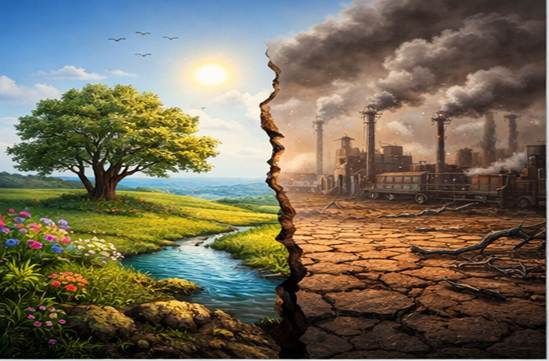
One of the key areas of eco-critical behavior is an environmentally conscious idea, which is extremely entrenched in modern literature. Contemporary writers do not fail to note problems relating to pollution, deforestation, biodiversity loss, and the unsustainable use of natural resources. They use memory, images and symbolism to generate a sense of urgent so as to provoke readers to realize the urgency of environmental problems. This increased awareness is not only informative, but also ethical, since it challenges the individual and societies to reassess their association with the environment and to make responsible and sustainable activities.
The perception of the nature in the works of modern English literature determines an important shift in the context of literature of the earlier period. In contrast to Romantic literature, when nature was usually romanticized as something harmonious, nurturing, and able to transform even the most difficult human actions into civility, modern works depict nature as fragile, threatened, and severely influenced by human actions. The destructive outcomes of the anthropocentric development are often portrayed as nature being subject to industrialization and technological progress, showing all the devastating effects. Meanwhile, nature is reinterpreted within some literature readings as a force to be resisted and to regenerate and thus provides a more clear and complex perspective of the nature than ever before.
One key theme that comes to light in this eco-critical structure is sustainability. Increasingly, modern literary accounts are proclaiming the need to balance the ecology, conserve the environment, and utilize the natural resources with responsibility. These readings put more emphasis to stability in the long-term environmental concerns than short term economic benefits, which is compatible with the discussions of sustainable development worldwide. Through the description of the negative consequences of environmental negligence, the science fiction prompts its audience to embrace a lifestyle and policies that put ecological health and fairness toward the younger generation at its core.
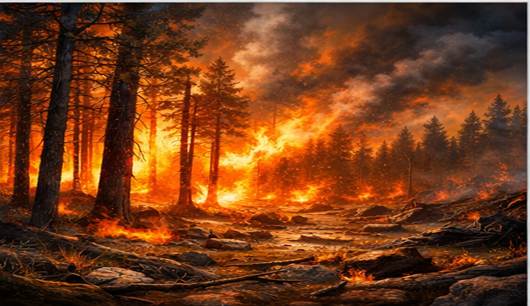
Although being one of the most immediate global issues, climate change takes center stage in literary discussions of the time. The disturbances suiting the shifting climatic conditions in the modern world can be viewed in the works of English literature through the anxiety and doubt that accompany the rise in temperatures, the natural calamities and displacement of human communities, as well as non-human ones. Such representations not only warn but are also very engaging stories that help humanize the abstract issue of climate change and, thus, make it more easily available to and emotionally resonant with the readers. By so doing, literature helps spread a larger cultural perspective of climate-related problems and serve to strengthen the necessity to act swiftly and jointly.
|
Figure 2 |
Considering the human-nature relationship is a fundamental issue in eco-critical studies. Anthropocentric and traditional perspectives that distinguish human beings as a superior entity and detached to nature are getting more and more challenged by eccentric perspectives which highlight the interconnection and interdependence. The high and heroic attitude, which resulted in the destruction of nature and natural resources, is frequently criticized by modern works of literature, instead introducing a vision of coexistence, founded on a responsible and respectful attitude and ethical respect towards all forms of life. Such change in attitude is needed to overcome modern ecological concerns since it helps to approach development of humans in a more holistic and eco-friendly way.
|
Figure 3 |
To sum up, the introduction of eco-criticism, green consciousness, and other themes like sustainability and climate change into the contemporary English works has played a crucial role in putting the importance of literature as a medium of highlighting ecological issues. Revising the imagery of nature and reformulating meaning of human-nature interaction, literary works do not only mirror the facts of the environmental crises, but also stimulate solution and change. In this way, the contemporary English literature may be viewed as a potent means of preaching eco-mindedness and enhancing perception of the acuity of environmental conservation in the present-day world.
Final Conclusion
The current paper, An Eco-Critical Analysis of Modern English Literature: Depictions of Nature and Environmental Awareness, proves that eco-criticism has evolved as a key paradigm in the examination of the changing connection between literature and the natural surroundings. Based on an analysis of the English literary works of the contemporary period, one finds that the nature ceases to be a passive or only aesthetic object of the literature; but rather, the literature depicts the environment as dynamic and weak, and highly influenced by human intervention. This change portrays the increasing consequences of environmental degradation and climate change and ecology imbalance on a global scale.
The discussion uncovers that the contemporary English literature is instrumental in bringing to focus the main environmental issues of deforestation, pollution and loss of biodiversity, and climate crisis. Strong narrative methods, symbolism and imagery are the means by which the authors reveal the outcomes of unsustainable human activity, and challenge anthropocentric views. By so doing, literature opens up as a middle-ground that not only represents but also opposes the dominant modes of thinking that focus on economic prosperity, criminalizing ecological health.
Moreover, the environmental awareness as the key point in the modern literary discussion is also highlighted in the study. Literary works can help in the perception of the readers to be responsible towards the nature. They stimulate the transition between a humanistic approach of thinking and eccentric viewpoint, acknowledging inherent worth of all living and non-living components of the ecosystem. These change in views are necessary in responding to the present environmental issues and achieving sustainable development.
The idea of sustainability becomes one of the crucial points of contemporary literary discourse, focusing on the necessity of the harmony of the development of people and the environment. Literature promotes a sense of ethical accountability, conservation, and ecological stability over the long term, thus in tandem with the world struggling to attain sustainable futures. Moreover, the rise in the portraying of the problem of climate change in literature is also evidence of the urgency of the problem and its far-reaching effect on human and non-human existence.
To sum it up, the critical study of modern English
literature can be a strong tool of eco-critical writing, which helps to close
the divide between human society and nature. Not only does it report on crises
involving the environment, but it also motivates critical thought and action.
By reformulating the human nature bond, and the ecological awareness,
literature has a role to play in the overall discussion on environmental
sustainability. Eco-criticism is thus an important, and topical area of focus in
the study of literature and provides an important source of truth in terms of analyzing how culture and imagination contribute towards
solving the environmental issues posed by the modern world.
ACKNOWLEDGMENTS
None.
REFERENCES
Adamson,
J., Evans, M. M., and Stein, R. (2002). The Environmental
Justice Reader: Politics, Poetics, and Pedagogy. University of Arizona Press.
Adeniyi,
E., and Onanuga, P. A. (2024). Language,
Literature and the Environment: Eco-Critical
Perspectives. Green Letters: Studies
in Ecocriticism.
Barry,
P. (2002). Beginning Theory: An Introduction
to Literary and Cultural Theory (2nd ed.). Manchester University
Press.
Buell, L. (2005). The Future of Environmental Criticism: Environmental Crisis and Literary Imagination. Blackwell Publishing.
Garrard, G. (2004). Ecocriticism. Routledge. https://doi.org/10.4324/9780203644843
Golpaygani, F., and Yaghoubi, R. (2021). Dialogue Between Nature and Human in Contemporary Fiction. DOAJ Journals.
Heise, U. K. (2008). Sense of Place and Sense of Planet: The Environmental Imagination of the Global. Oxford University Press. https://doi.org/10.1093/acprof:oso/9780195335637.001.0001
Love,
G. A. (2003). Practical Ecocriticism: Literature, Biology,
and the Environment. University
of Virginia Press.
Meeran,
J. A. (2020). Ecocriticism in Literature: Examining Nature in Contemporary Fiction. International Journal of Integrated Research and Practice.
Morton,
T. (2007). Ecology Without Nature: Rethinking Environmental Aesthetics. Harvard
University Press.
Phillips,
D. (2003). The
Truth of Ecology: Nature, Culture, and Literature
in America. Oxford University Press.
Ramiz,
F. H. (2024).
Eco-Criticism: A New Direction of Modern Literary
Criticism. Academics and
Science Reviews Materials.
Rigby, K. (2004). Topographies of the Sacred: The Poetics of Place in European Romanticism. University of Virginia Press.
Rishma, R. D., and Gill, J. C. R. (2024). Eco-Criticism: Exploring the Interplay Between Literature and Environment. World Journal of English Language. https://doi.org/10.5430/wjel.v14n4p563
Ryan, J. C. (2020). Ecocriticism in the Anthropocene: A Review of Recent Developments. The Year's Work in Critical and Cultural Theory, 28(1), 21–43. https://doi.org/10.1093/ywcct/mbaa018
Sharma, T., Thakare, K. R., Jha, S. K., and Khandagale, J. S. (2024). The Climate of Fiction: Eco-Criticism and Environmental Imagination in 21st-Century Literature. International Journal of Environmental Sciences.
|
|
 This work is licensed under a: Creative Commons Attribution 4.0 International License
© ShodhSamajik 2026. All Rights Reserved.